The Gulf Coast is a biodiversity hot spot – and methane gas (LNG) is threatening all of it.
Over 15,000 documented species live in or travel through the area, 130 of which are federally protected, including whales, sea turtles, corals, dolphins, ocelots, migratory birds, snakes, and bats. Among those threatened include species only found in the Gulf of Mexico, like the critically endangered Rice’s Whale.
But the Gulf is experiencing a methane gas boom. Of the 36 LNG terminals proposed, operating or under construction in the U.S., 28 of them are clustered on the Gulf Coast. These terminals threaten crucial ecosystems like endangered species habitats, major wetlands, migratory routes for birds and marine animals, and fisheries that local communities depend on.
Read the brief: LNG Impacts to Biodiversity in the Gulf South
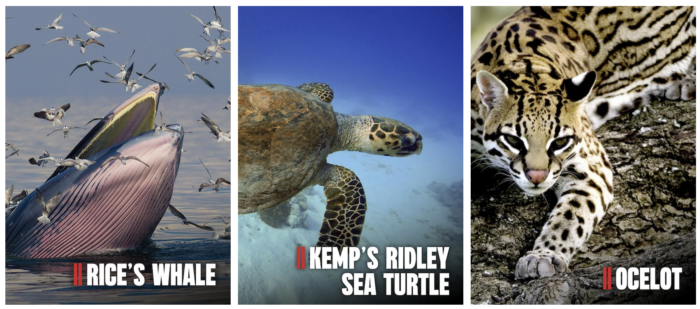
Among the areas impacted are both Key Biodiversity Areas (KBAs), sites that contribute significantly to the global health of biodiversity, and International Union Conservation of Nature (IUCN) protected areas, which are places recognized and managed for the long-term conservation of nature, ecosystem services, and cultural values.
The Gulf Coast – which is home to 66% of the country’s vital estuary wetlands – is experiencing more dramatic wetland loss than any other U.S. coastal area. 5,411 acres have already been permanently impacted, with 1,123 forever lost, and future LNG construction & expansion threatening at least 21,000 more.
From dredging, habitat loss, air and water pollution, noise and light pollution, and vessel traffic, to the broader climate impacts of methane gas — every step of the LNG value chain creates layers of cumulative ecological stress.
Banks and insurance companies must adopt clear exclusions of financing or underwriting for LNG and fossil fuel expansion affecting KBAs, IUCN protected areas, or IUCN Red List endangered species habitat.
Learn more in our new brief: LNG Impacts to Biodiversity in the Gulf South