Key Findings
- Royal Golden Eagle (RGE) committed to eliminate deforestation in its supply chain from 2016. Nine years on, and RGE’s pulp & paper supply chain continues to source from pulpwood concessions actively clearing rainforests via the controversial woodchip mill, PT. Balikpapan Chip Lestari (PT.BCL). RGE acknowledges non-compliance with its policies.
- New guidelines published by the Forest Stewardship Council (FSC) mean that PT.BCL wood chip mill is now considered “under the financial control” of RGE and therefore part of its corporate group. As such, RGE continues to breach its No Deforestation commitment that underpins its attempts to reassociate with the FSC.
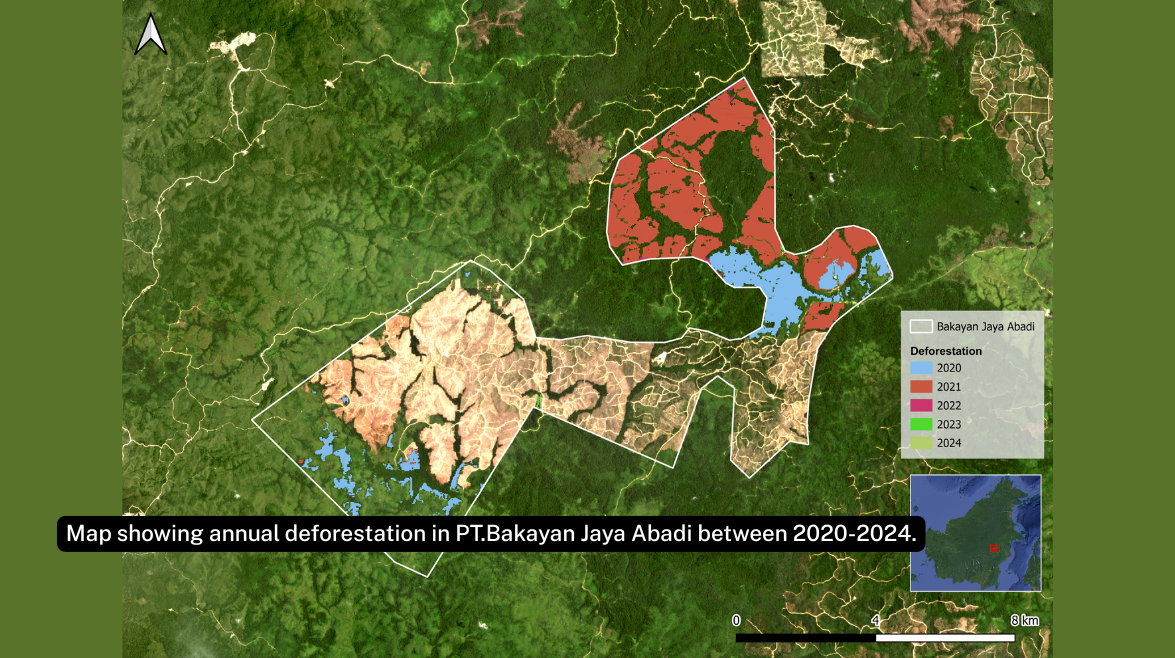
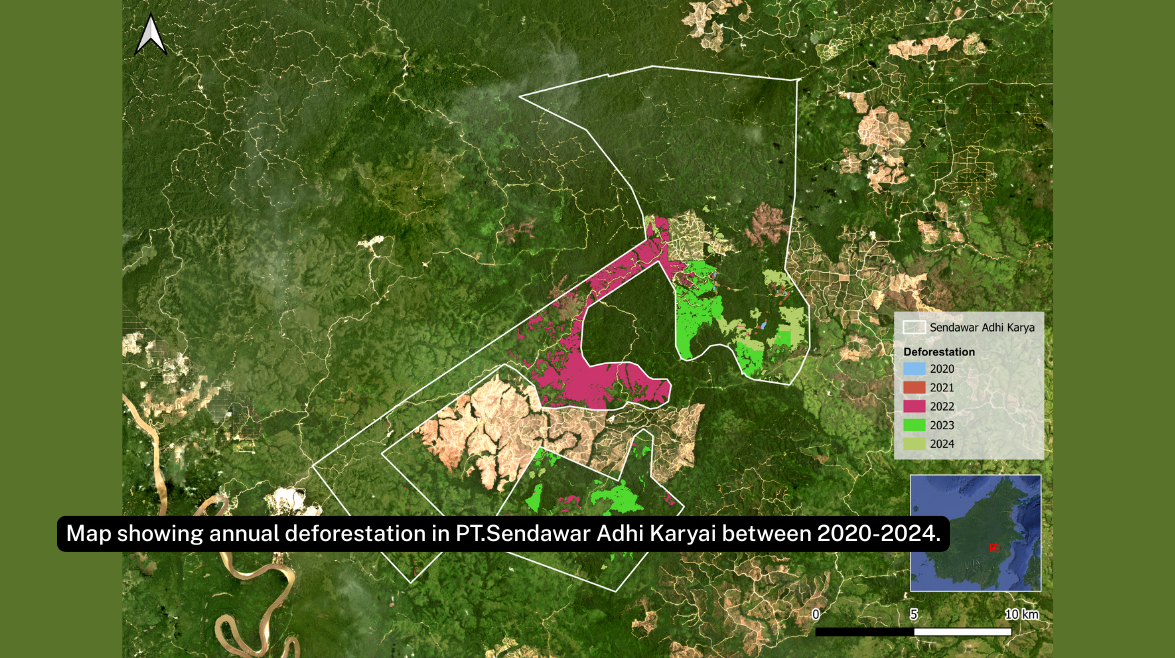
- Government records and satellite analysis show that PT.BCL woodchip mill — which exclusively supplies RGE’s largest pulp factory in China — has sourced from two pulpwood plantations that cleared 5,565 ha natural forests between 2020-2024.
- The Japanese megabank Mitsubishi UFJ Financial Group (MUFG) continues to finance RGE’s pulp division, providing credit of US $222 million to APRIL between 2020-July 2025, including contributing US $95 million to a syndicated loan in 2024.
View This Investigation on a Story Map >>
Royal Golden Eagle’s Deforestation Nexus
Royal Golden Eagle (RGE), a major global supplier of viscose, paper, tissue, and packaging, continues to source from suppliers clearing Indonesia’s rainforests, despite the group’s well-publicized commitment to eliminate deforestation from its supply chain by the start of 2016.
Customs records, satellite analysis and supply chain data show that an Indonesian wood chip producer supplying Asia Symbol, RGE’s mega-sized pulp mill in China, has been sourcing large volumes of wood from two pulpwood plantations that cleared over 5,500 ha of natural forest between 2020-2024 in East Kalimantan Province, on the island of Borneo. This data on customs records and wood supply has been compiled by supply chain transparency platform Trase, in their latest update on the Indonesian pulp sector. Field investigations by Auriga have documented ongoing deforestation through 2025.
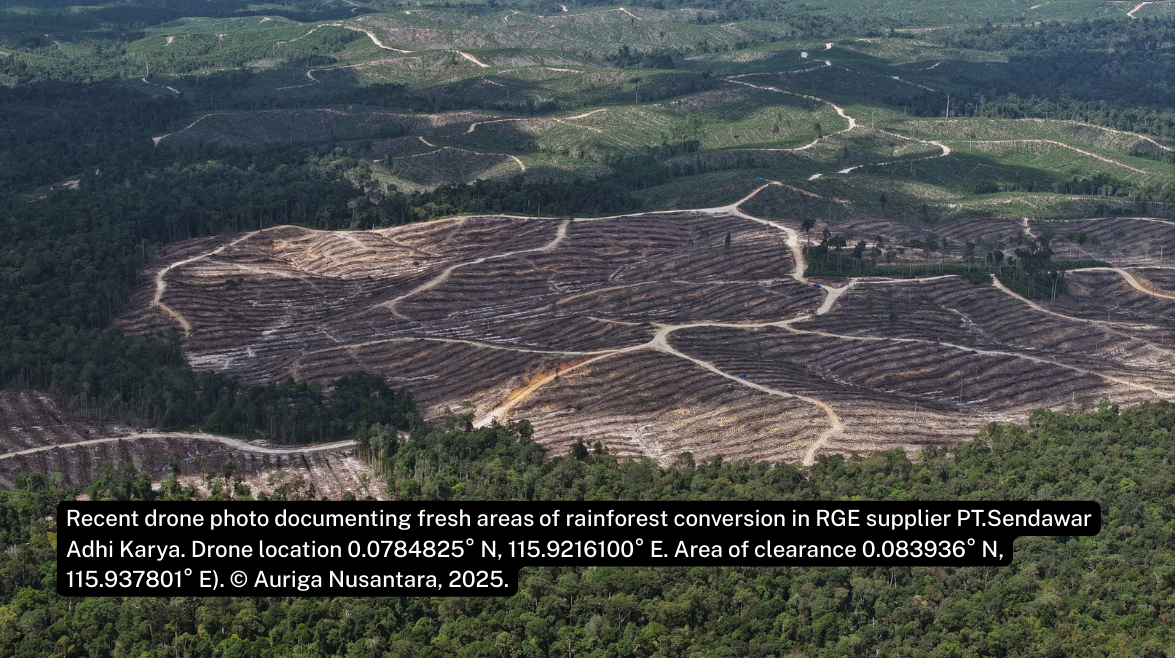
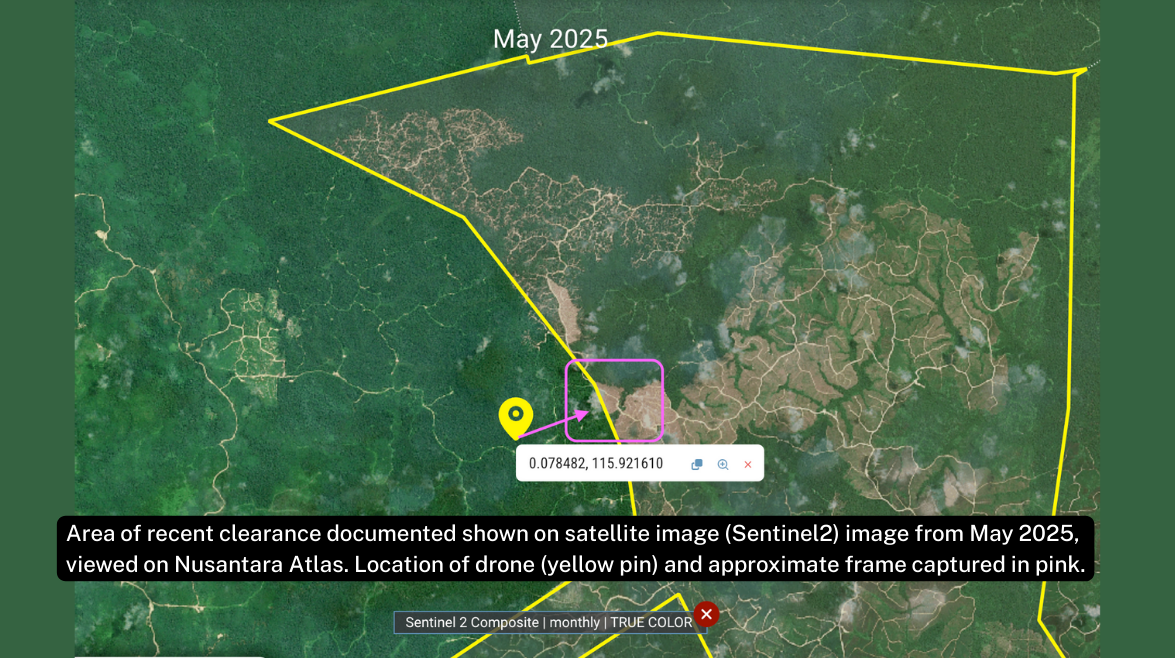
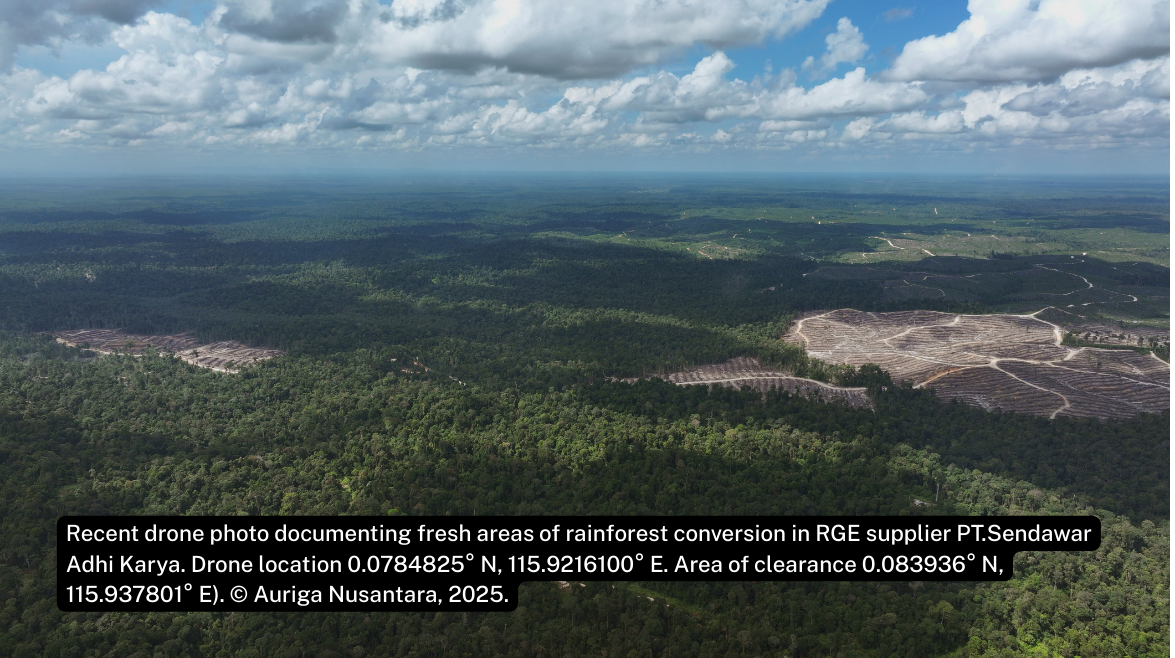
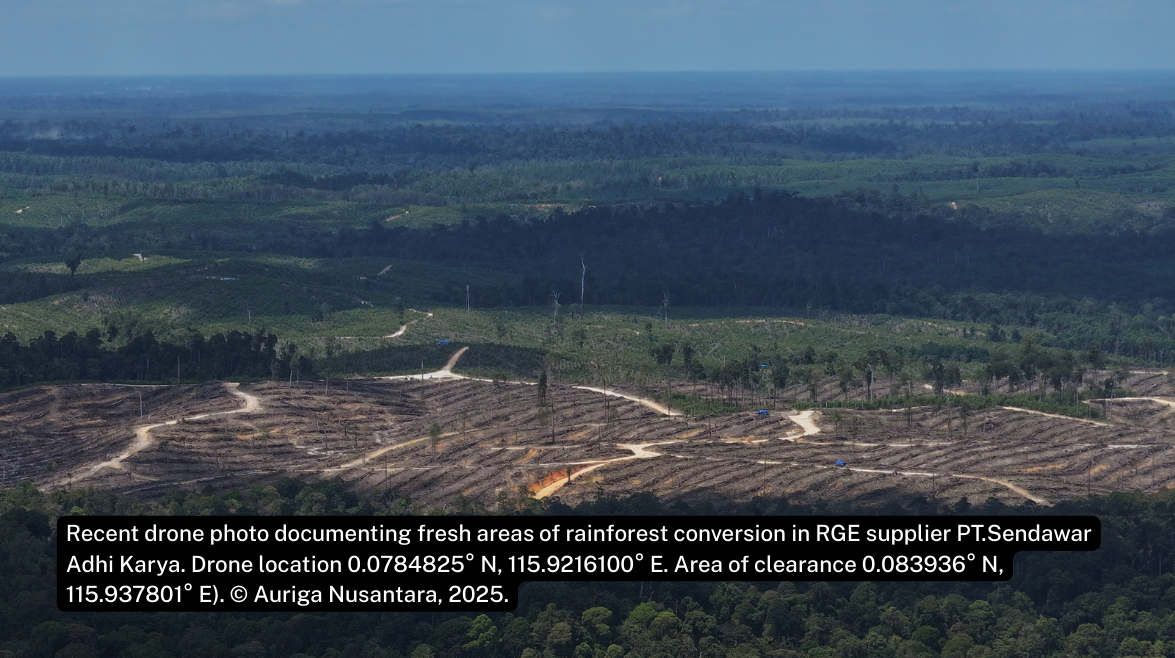
The woodchip mill in question — PT. Balikpapan Chip Lestari — has been an exclusive supplier to RGE over multiple years. According to new guidelines adopted by the Forest Stewardship Council (FSC) in October 2025, this means the mill is deemed to be under the financial control of RGE and therefore part of its corporate group. As such, RGE appears to be in breach FSC’s Policy for Association which prohibits the destruction of High Conservation Value areas and significant conversion of forests to non-forest use. RGE has been attempting to regain the FSC association through a remedy process for its pulp group APRIL. However, this process was suspended in September 2025 after allegations that workers from RGE group’s pulp company Toba Pulp Lestari violently assaulted Indigenous community members.
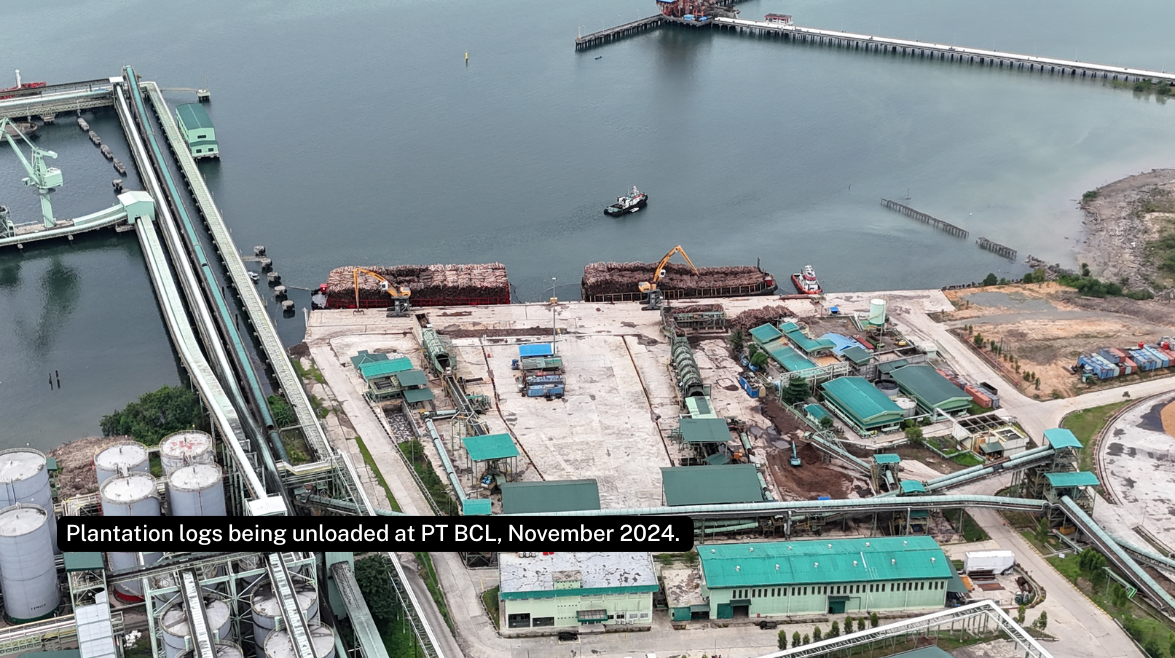
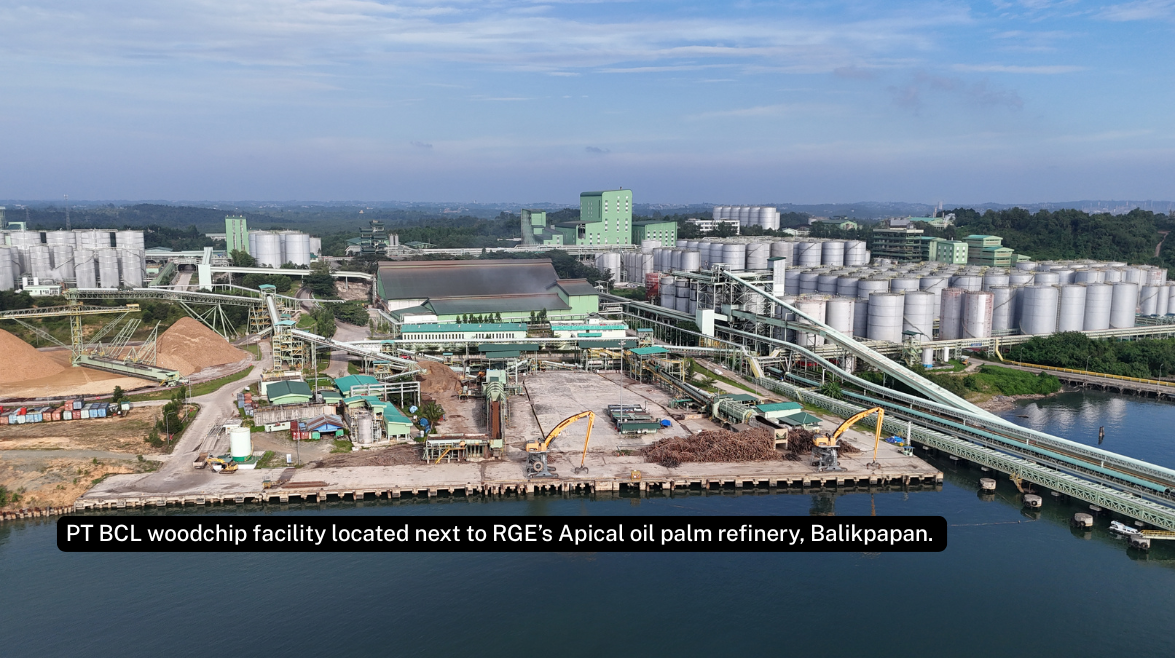
RGE responded to the allegations, stating that their “preliminary analysis…indicates that land cover change did occur in the concessions of [PT] SAK and [PT] BJA between 2020 and 2024 and that this land cover change was likely non-compliant with our no-deforestation and sustainable sourcing policies”. Read Royal Golden Eagle’s full response below.
In July 2023, Asia Symbol (part of RGE) acknowledged this same wood chip supplier, PT.BCL had been sourcing wood from suppliers driving deforestation between 2016-2022, in breach of RGE and Asia Symbol’s No Deforestation Commitment. In response, Asia Symbol stated that PT.BCL had “been required to put in place a robust due diligence system and conduct regular field verification for all wood sourced.” Since this scandal, Asia Symbol’s sourcing from PT.BCL has remained steady, and in 2020 represented around a fifth of Asia Symbol’s total wood chip supply. However, these new findings show that PT.BCL has continued to source from companies clearing natural forests, with PT.SAK and PT.BJA representing 36% of its total wood supply in 2024. This sourcing has occurred during Asia’s Symbol’s professed enhanced due diligence and verification of PT.BCL’s sourcing. The persistence of deforestation-linked suppliers in RGE’s value chain demonstrates that its claim to have “zero tolerance” for deforestation is bogus.
RGE responded that “this is not the first time that compliance by [PT] BCL and its suppliers with our policies has come into question … Based on the preliminary findings of our investigation…Asia Symbol has taken the decision to immediately cease all supply from [PT] BCL. Asia Symbol and any other RGE companies will not source from [PT] BCL in the future.”
The Deforestation Supply Chain
Satellite analysis and field observations show that since 2020, over 5,500 hectares of rainforest — equivalent to an area the size of over 7,000 soccer fields — have been cleared for pulpwood plantations in the neighboring concession areas of PT Sendawar Adhi Karya (PTSAK) and PT Bakayan Jaya Abadi (PT BJA), according to remote sensing satellite analysis commissioned by RAN (methodology available below).
Collectively, PT.SAK and PT. BJA sent all their plantation timber — in excess of 400,000 cubic meters of wood in 2024 — to the PT.BCL chip mill according to data reported by PT.BCL to Indonesia’s Ministry of Environment and Forestry. In the same year, shipment records show that PT.BCL then exported 100% of its wood chips — over 800,000 tons valued at more than US$70 million, to Asia Symbol, one of RGE’s mega-sized pulp mills in Rizhao, Shandong Province, China. The shipment records were confirmed with analysis of the movement of the vessels that transported the wood chips between Balikpapan, Indonesia and Rizhao, China using vessel tracking data.
The ultimate beneficial owners of PT.BCL are hidden by offshore shell companies, which have multiple overlaps with the RGE corporate group. While RGE denies that it owns or controls PT.BCL, the chip producer appears to be a vertically integrated facility in RGE’s pulp supply chain, exclusively supplying RGE and operating from the same industrial complex as RGE’s Kutai oil palm refinery, with which it shares a port for shipments.
Forest Landscapes of the Mahakam River
PT.SAK and PT.BJA concessions are in Kutai Barat district within the watershed of the mighty Mahakam River — the third largest river on the island of Borneo. The upper reaches of the Mahakam (“Mahakam Ulu”) contain some of the largest tracts of intact rainforest left in Indonesia. However, the Mahakam is threatened by multiple industries including coal mining, oil palm, logging and in this case, pulpwood plantations that continue to fragment the remaining rainforests of the Mahakam River watershed.
Caption: A pod of seven critically endangered Irrawaddy dolphins playing in Mahakam River in November 2024. © RAN
The Mahakam region is home to many critically endangered and iconic species including the critically endangered Mahakam River Dolphin (known as “pesut”) and the elusive Sumatran Rhinoceros. Previously thought to be extinct in the wild, these rhinos were detected in Tabang Subdistrict, close to PT.SAK’s concession in 2025 and in the Mahakam region in 2016. The rhino has since been rescued, however these forests remain critical habitat for its successful reintroduction. Other fauna include the endangered Borneon Orangutan, Proboscis Monkeys and Helmeted Hornbill.
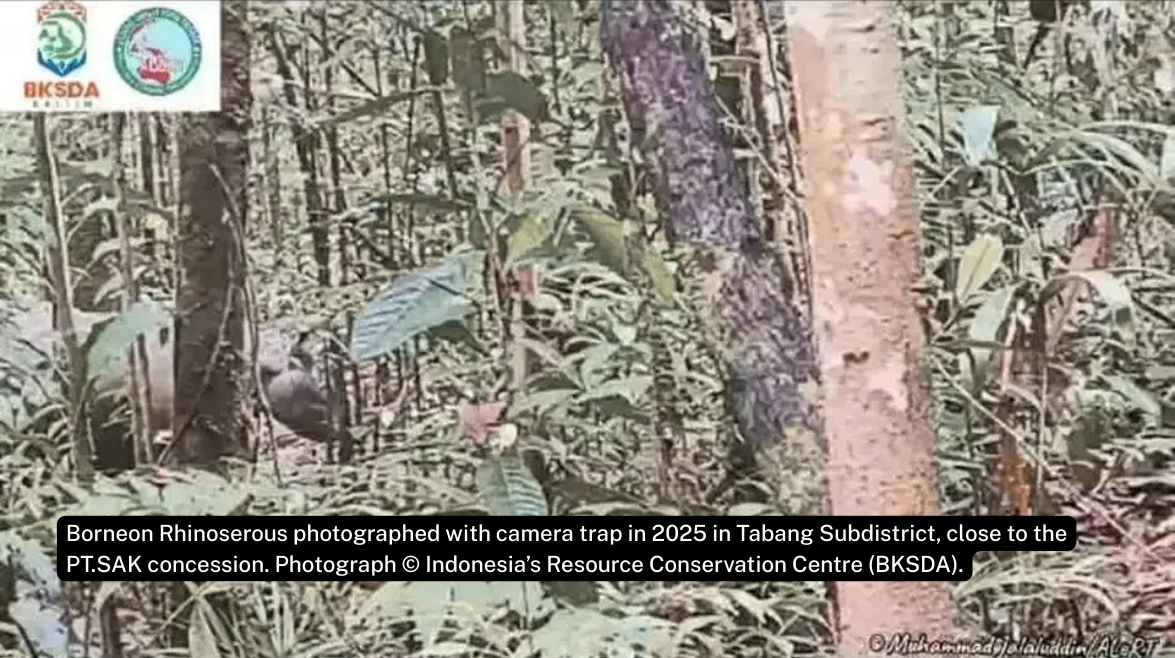
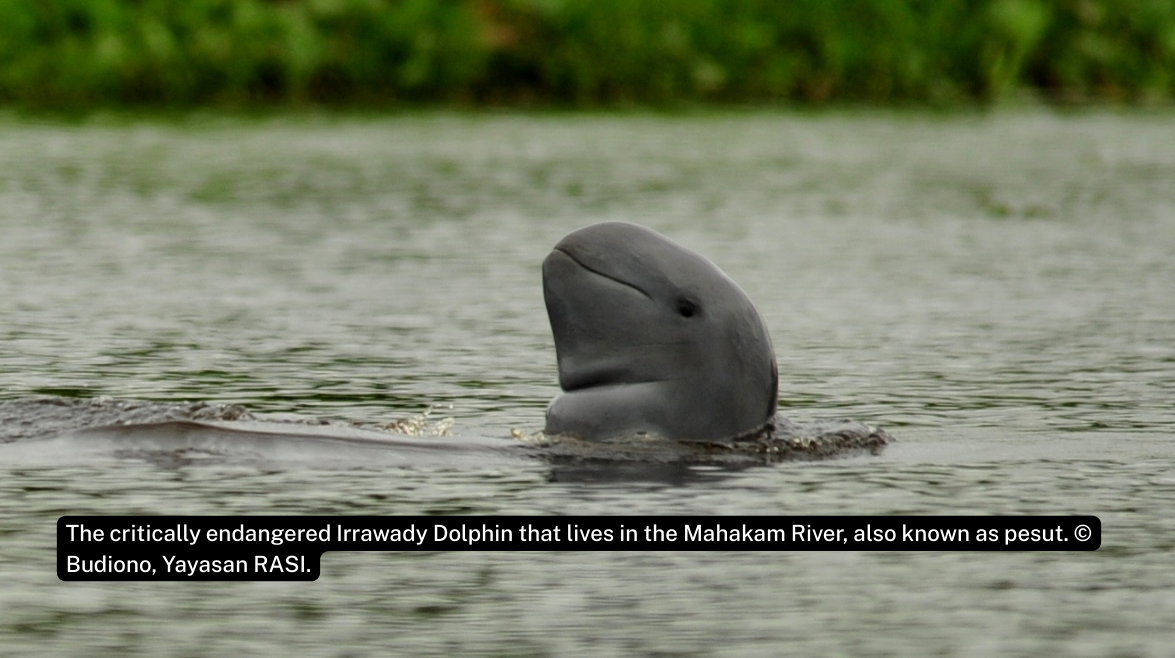
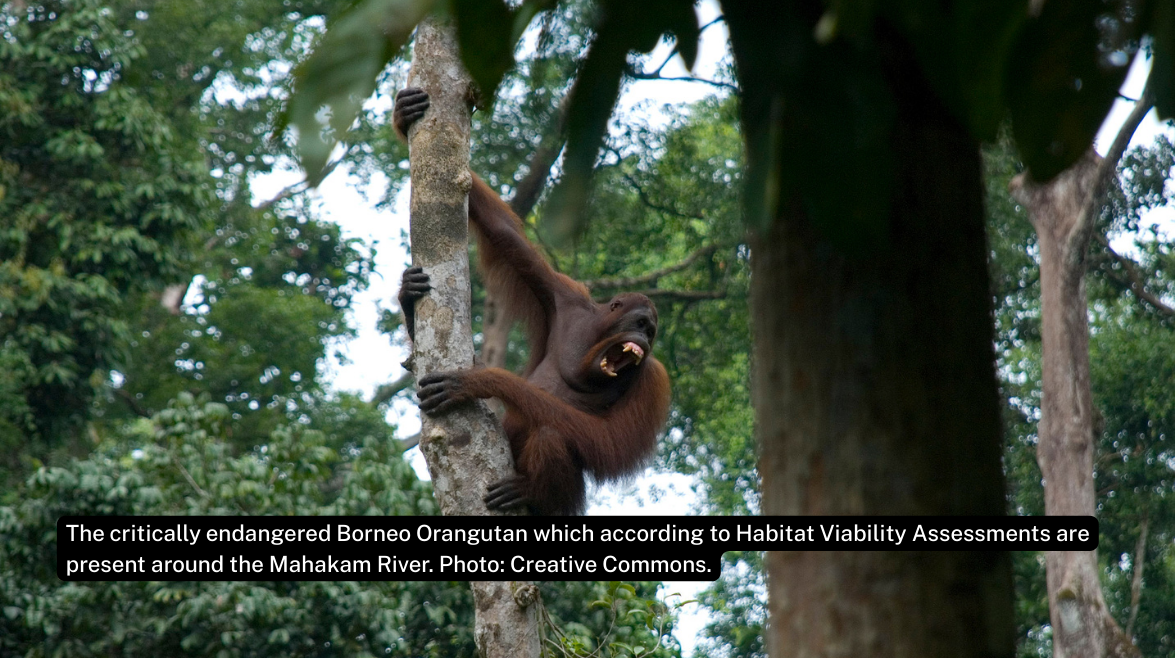
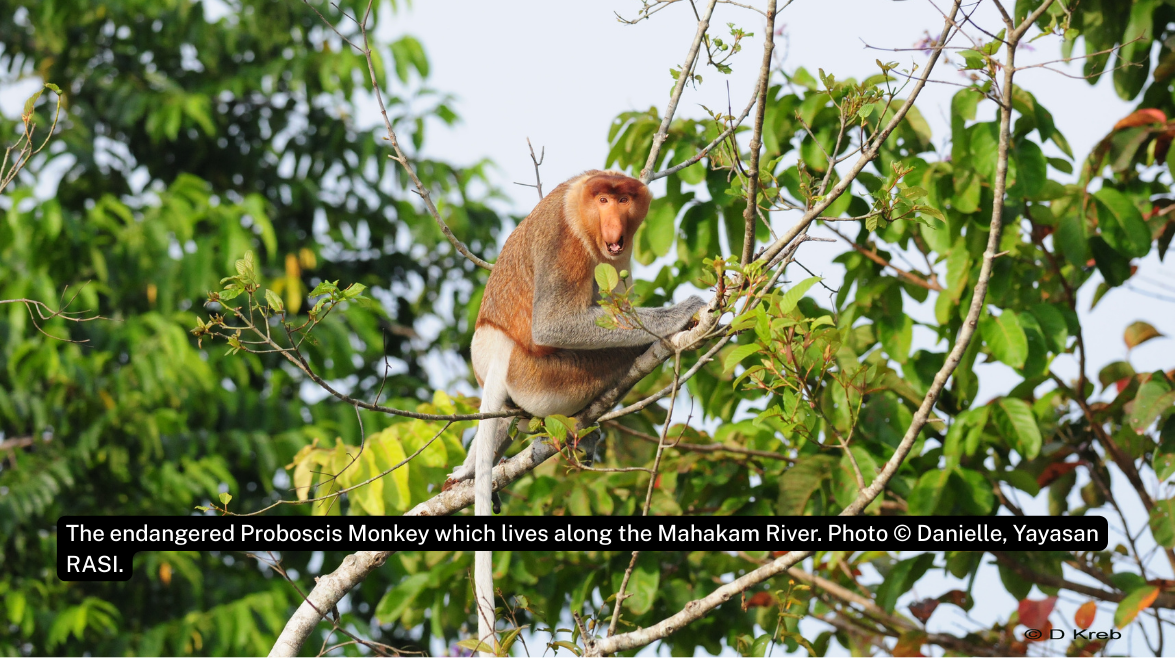
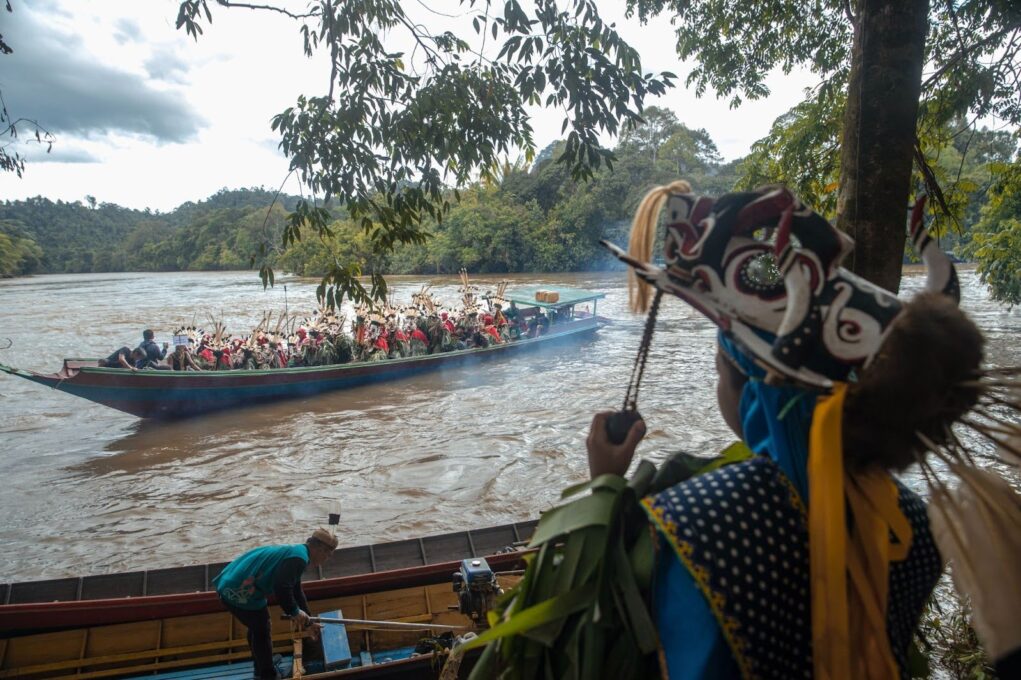
The incredible landscape and biodiversity of the upper Mahakam river is stewarded by Indigenous Dayak communities that depend on nature to support their livelihoods through traditional and modern farming. Many of these communities have been fighting to gain customary rights — hutan adat — over their traditional land and forests, and protect against expansion by companies seeking new areas for logging, oil palm and mining.
MUFG Fails to Address its Exposure to Deforestation
Japanese megabank Mitsubishi UFJ Financial Group (MUFG) is an important creditor to Royal Golden Eagle group across both its pulp and palm oil divisions. It is the second largest creditor to RGE’s Indonesia operations and has acted as a lead arranger and sustainability advisor on billions of dollars in Sustainability-Linked Loans for the group. Forests & Finance data show that MUFG has provided US $222 million to RGE’s pulp company APRIL between 2020-July 2025, including contributing US $95 million to a syndicated loan in 2024.
Citing client confidentiality, MUFG declined to comment on the findings of this investigation.
In 2021, MUFG adopted a “No Deforestation, No Peatland, No Exploitation” (NDPE) policy for its palm oil division, and later extended this in 2023 to cover its pulp and paper clients. Yet, the bank has disclosed little on how it plans to implement these policies and integrate them into its due diligence and risk management processes. MUFG has not disclosed a clear cut-off date or time bound commitments by which it plans to achieve a deforestation-free portfolio. The bank is falling well short of the expectations set out by a leading group of institutional investors in 2024 to address deforestation.
RAN wrote to MUFG presenting the evidence of deforestation related to its client RGE but the bank did not provide a response.
There is mounting evidence that RGE operates a complex network of “off balance sheet” operations, or “shadow companies” that continue to drive deforestation across Indonesia (see reports from 2020, 2023, 2024). The ultimate beneficial owners of these shadow companies are obscured by offshore companies in secrecy jurisdictions. However, multiple overlapping directorships, shared resources, together with employee testimony indicate that these operations are effectively controlled by Royal Golden Eagle. RGE denies its involvement in these operations.
To address deforestation present in MUFG’s pulp sector lending, multiple multistakeholder initiatives recommend banks apply their policies and due diligence at the level of their client’s entire corporate group, rather than just the specific business or subsidiary that a bank lends to. Such an approach is endorsed by the Institutional Investor Group on Climate Change (IIGCC), Accountability Framework Initiative (AFi), Deforestation-Free Due Diligence Guide, and Forests & Finance policy assessment.
Royal Golden Eagle’s Response (11 Dec 2025)
Dear Rainforest Action Network,
This is in response to your letter dated 24 November, 2025 regarding wood supply received by Asia Symbol from its supplier PT. Balikpapan Chip Lestari (BCL), specifically the wood supply sourced by BCL from companies PT Sendawar Adhi Karya (SAK) and PT Bakayan Jaya Abadi (BJA). In your letter you stated that you had evidence that between 2020 and 2024 SAK and BJA had converted forest areas into plantations in their concessions in East Kalimantan.
We take all such allegations seriously. Asia Symbol investigated your claims and preliminary analysis of the concessions of the two suppliers to BCL indicates that land cover change did occur in the concessions of SAK and BJA between 2020 and 2024 and that this land cover change was likely non-compliant with our no-deforestation and sustainable sourcing policies and requirements.
As you have noted in your letter, this is not the first time that compliance by BCL and its suppliers with our policies has come into question. Asia Symbol had in 2023 requested BCL to suspend supply from its supplier PT. Industrial Forest Plantation (IFP) after claims that IFP had conducted non-compliant plantation establishment and BCL had implemented that suspension.
Based on the preliminary findings of our investigation regarding supply to BCL by SAK and BJA, and following the earlier issues with BCL and its then supplier IFP in 2023, Asia Symbol has taken the decision to immediately cease all supply from BCL. Asia Symbol and any other RGE companies will not source from BCL in the future.
Asia Symbol’s decision indicates the seriousness with which we take issues of non-compliance with our wood sourcing and sustainability policies and processes. In addition to immediately ceasing wood sourcing from BCL, Asia Symbol is continuing to review its wood supply due diligence and compliance systems to ensure they are rigorously applied to and by every supplier, and that their application is strengthened.
We ask that our response above is published in full in your upcoming report.
Sincerely,
Lucita Jasmin
Group Sustainability Director
