Mondelēz International — the food giant behind Oreos, Cadbury, and Toblerone — has spent years cultivating an image as a sustainability leader, earning high environmental scores and pledging to eliminate deforestation and human rights abuses from its supply chains.
Investigative reporting, however, reveals a starkly different reality: of a company that appears more focused on protecting its reputation than preventing harm to vulnerable people and the planet.
For decades, Mondelēz has faced scrutiny over its cocoa sourcing in West Africa, where child and forced labor are widely documented and an estimated 1.56 million children work on cocoa farms. In 2022, a Channel 4 investigation reported that children as young as ten were using machetes to harvest cocoa pods on a Ghanaian farm allegedly linked to Mondelēz.
Mondelēz has emphasized that such practices violate its policies and has pointed to its child labor monitoring system. But that system does not cover all the farms in its supply chain, and the company lacks full traceability for its cocoa — meaning it cannot determine whether child labor is involved in some of the cocoa it uses.
Concerns extend beyond West Africa. In Brazil, Global Witness reported that Mondelēz had sourced palm oil from producers allegedly linked to violent campaigns against Indigenous and traditional communities, including land grabbing and forced evictions. According to Global Witness, Mondelēz did not respond to requests for comment.
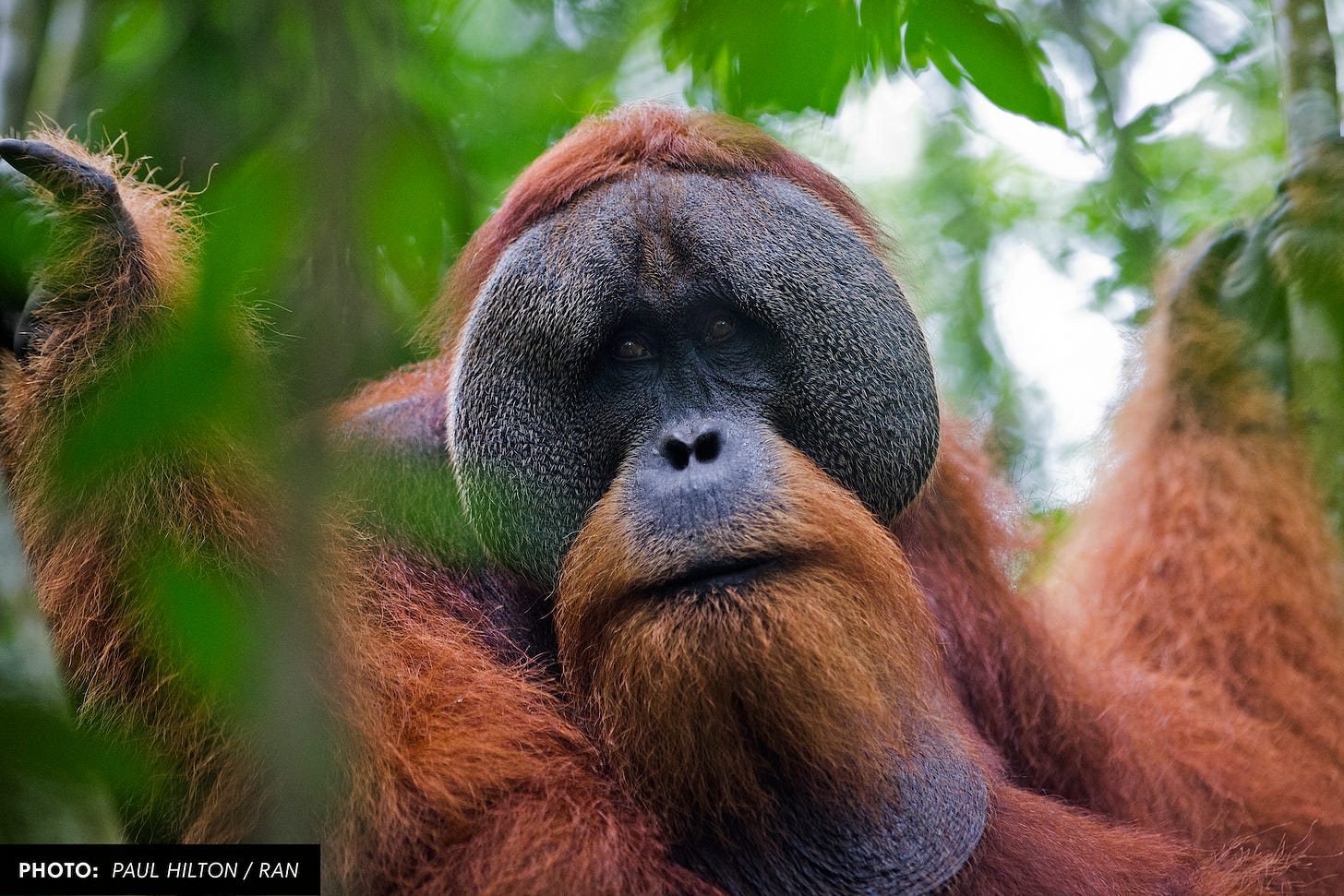
Similar issues emerged elsewhere. Just last year, RAN and our partners documented evidence that pointed to Mondelēz and other brands sourcing palm oil from illegally cleared peatlands in Sumatra, Indonesia — an area known as the “Orangutan Capital of the World.” Mondelēz likewise did not respond to those allegations.
Despite reports and allegations of intimidation and violence against land defenders connected to its supply chains — including in Ghana, the subject of an ongoing case in D.C. Superior Court — Mondelēz has refused RAN’s calls to adopt a zero-tolerance policy on violence against land defenders.
Rather than strengthening accountability, Mondelēz has also taken a leading role in efforts to delay the European Union Deforestation Regulation, a law intended to hold companies accountable for deforestation and human rights abuses in commodity supply chains. That position has put Mondelēz at odds with several of its industry peers, including Nestlé, Mars, and Ferrero, which opposed further delays.
The Mondelēz case raises a broader question about the $45 trillion ESG investing market. If a company can receive top sustainability ratings while documentary evidence links it to regulatory obstruction, deforestation, allegations of child labor, and reports of violence against land defenders, what exactly are those ratings measuring?
Similar doubts apply to voluntary corporate policy commitments. Mondelēz was the first company to raise the issue of deforestation in the cocoa sector at the COP21 summit in Paris in 2015 and adopted a formal Human Rights Policy in 2021.
Those actions were meant to signal sustainability leadership to the public, investors, and regulators. But the evidence points elsewhere — to a company that embraces the language of responsibility without delivering its promises.
The issue is no longer whether Mondelēz has policies, which it clearly does. The question is whether those policies serve as meaningful safeguards, or as a way to launder its reputation to the public.