Mahakam Ulu is a region in Indonesia that still has some of the largest intact rainforests in Borneo. Our readers may remember it from an article we shared just a couple of weeks ago.
The rainforest is under threat as industry expands, including pulpwood plantations — where rainforests are cleared to grow trees that will be turned into paper, cardboard, and fabrics for the fashion industry.
Using satellite images and on-the-ground research, RAN and our Indonesian partners found that large areas of rainforest were cleared inside pulpwood plantations near the Mahakam River. The wood from these cleared forests was then sent to an Indonesian woodchip company called PT Balikpapan Chip Lestari (PT BCL).
Shipping records show that these woodchips then traveled to a major pulp mill in China owned by a company called Asia Symbol, which is in turn part of a huge conglomerate called Royal Golden Eagle (RGE) — one of the world’s biggest producers of paper, packaging, and fabrics.
That means that the rainforest destruction we observed in Mahakam is already making its way into products sold globally.
Following our investigation, RGE said it would stop buying woodchips from PT BCL. However, evidence suggests that PT BCL is actually controlled by RGE itself, something which the company denies.
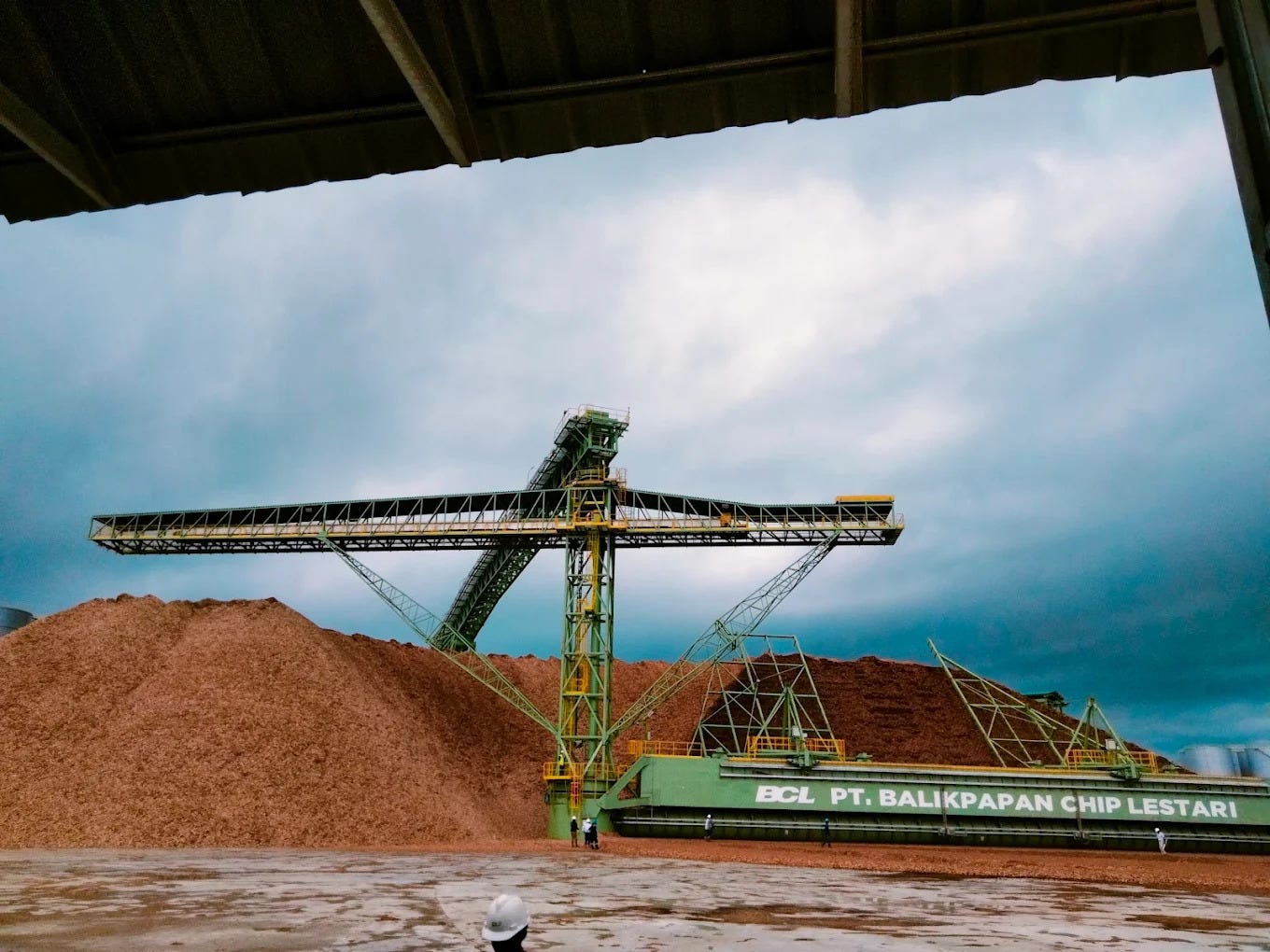
In the past, investigators have uncovered evidence that RGE controls a vast network of “shadow companies” that conceal parts of its business from the public and sustainability certifiers — something which RGE has consistently denied. If investigators are correct, PT BCL could be a part of that network.
The investigation also raises questions about large banks, including Japan’s biggest bank group, Mitsubishi UFJ Financial Group (MUFG), which continues to provide financing to RGE’s pulp division. MUFG has “no deforestation” policies, but has not clearly explained how it will enforce those policies in the event its big corporate clients are operating networks of shadow companies engaged in deforestation.
What’s at stake is that the Mahakam region is home to incredible biodiversity — including the critically endangered Mahakam River dolphin (“pesut”), along with orangutans, proboscis monkeys, and hornbills. The forest is also home to Indigenous Dayak communities, who depend on it for their livelihoods and are fighting for land rights to protect their rainforests from corporate activity.
Permits for industrial logging, oil palm, and coal mining now cover more than sixty-five percent of the Mahakam Ulu regency. If trends continue, the Mahakam will lose twenty per cent of its intact forests in just five years.
It’s an all too familiar, and frustrating, story: A priceless rainforest being snuffed out in the pursuit of endless profits.