2025 proved to be a challenging year for the global climate movement, with a trifecta of escalating disasters, a changing political landscape, and cuts to international aid uniquely affecting frontline communities in the Global South. Despite these serious challenges to grassroots organizing, Rainforest Action Network’s Community Action Grants has continued to be a pillar of support for grassroots environmental organizations, distributing over $825,000 through 75 grants across 14 countries in 2025. These grants supported struggles as diverse as land rights strategies in Asia, BIPOC communities fighting against extraction in the U.S. Gulf South, and Afro-descendent and Indigenous political autonomy in South America.
Supporting Indigenous and Frontline Participation at COP 30
A key part of RAN’s Community Action Grants strategy this year was mobilizing funds to support Indigenous and frontline communities’ planning of, and participation in, events and actions at the UN Climate Conference (COP30) in Belém, Brazil, in November. These grants included support for Indigenous women-led delegations from across the Amazon, as well as for community-led events and actions to develop shared strategies to pressure governments, corporations, and financial institutions to implement an equitable phaseout of fossil fuels and to invest in Indigenous-led solutions to protect their ancestral territories and the environment.
Funds from RAN’s Community Action Grants not only brought Indigenous and frontline communities to the conference but also enabled them to mobilize creatively to demonstrate that they are leading the fight against climate chaos. One example was the Yaku Mama Amazon Flotilla, a remarkable 3,000-km journey by river from the heart of the Ecuadorian Amazon to the conference at the mouth of the river in Brazil that involved switching vessels over 20 times! Along the way, activists documented frontline stories, advocated for policy change, and highlighted areas of illegal mining and Indigenous-led conservation, garnering significant media coverage and amplifying their voices on the international stage.
While the Flotilla brought communities to COP30 by navigating through the heart of the Amazon, RAN’s Community Action Grants Program supported another caravan that brought Brazilian frontline communities and Civil Society Organizations to the gathering by land. The Answer Caravan, an alliance of more than 40 Indigenous and local community organizations, social movements, and NGO allies, traversed 3,000 km over 13 days from Brazil’s soy-producing powerhouse, Mato Grosso state, to COP30’s host state, Pará. The caravan endured the heat of the Brazilian interior, following the Amazon’s principal grain export route while educating the media and civil society about agribusiness’s destructive advance into the Amazon and promoting community and environmentally friendly alternatives to large-scale corporate agriculture.
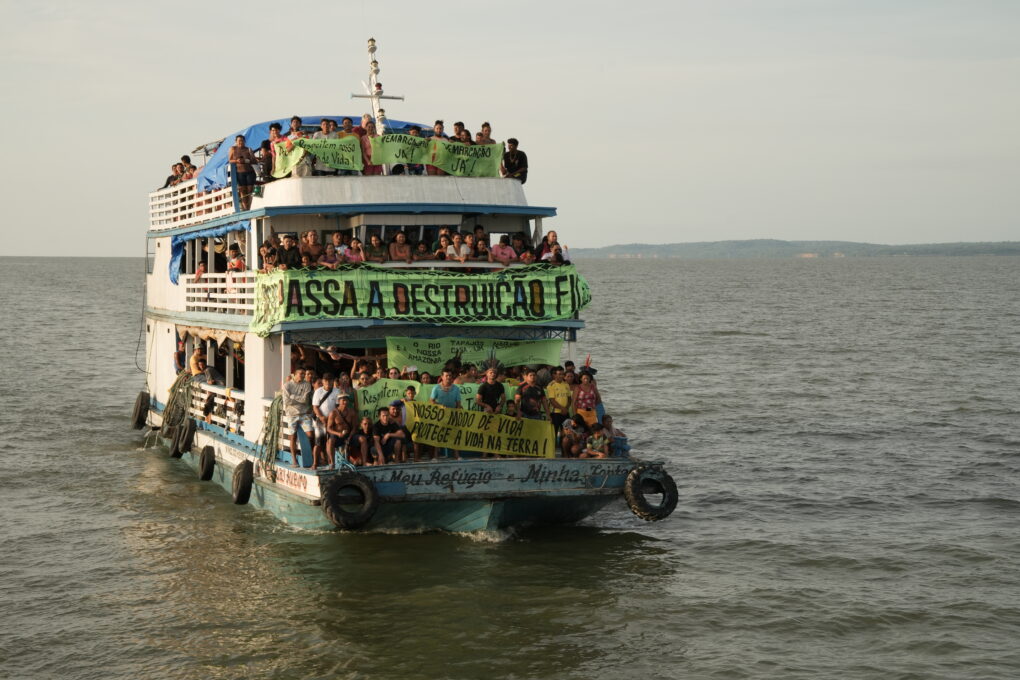
Once communities arrived at the COP30 gathering in the Amazonian city of Belem, RAN’s Community Action Grants supported activists’ participation in the conference, both inside and outside. For example, CAG grants went to support Casa Maraká, which offered a space for Indigenous peoples, Black environmental leaders, local communities, activists, artists, and decision-makers to share, connect, and communicate, amplifying ideas related to a Just Transition grounded in a climate justice framework that uplifts care economies, community-led solutions, and Indigenous rights. Community Action Grants also supported protests outside the Blue Zone, where policymakers convened. The protest led by the Munduruku Indigenous people, who live primarily in the Amazon states of Amazonas, Mato Grosso, and Pará, resulted in a meeting with the COP President and an announcement from the Brazilian government that declaratory ordinances will be issued for 10 new Indigenous lands, including the Munduruku’s Sawré Bap’im territory on the Tapajós River in the Amazon.
A Legacy of Partnership in Indonesia
In 2025, RAN continued our long history of partnering with frontline communities in Indonesia by supporting grassroots organizations nationwide through CAG grants. RAN is integrating our learning over the past 2 decades of work in the region into strategically building out our work in Eastern Indonesia. There are significant threats to Intact Forest Landscapes, Indigenous communities, and wildlife in East Kalimantan, an eastern province of Borneo, Indonesia, the third largest island in the world, home to the Dayak people. Of over 3.5 million acres of standing natural forests, nearly half is threatened by forest-risk commodity expansion. Research reveals over 500,000 acres of palm oil concessions and an additional 1.5 million acres of timber concessions.
We see the implications of work in the Mahakam Ulu Regency as being pivotal for preserving threatened Intact Forest Landscapes in East Kalimantan, Borneo. We have held numerous meetings with partners, developed a coalition campaign plan, and conducted a strategic communications workshop in Samarinda, which covered forest protection and Indigenous rights, stakeholder mapping, co-creation of a Theory of Change for the Mahakam Ulu campaign, as well as land rights campaigning.
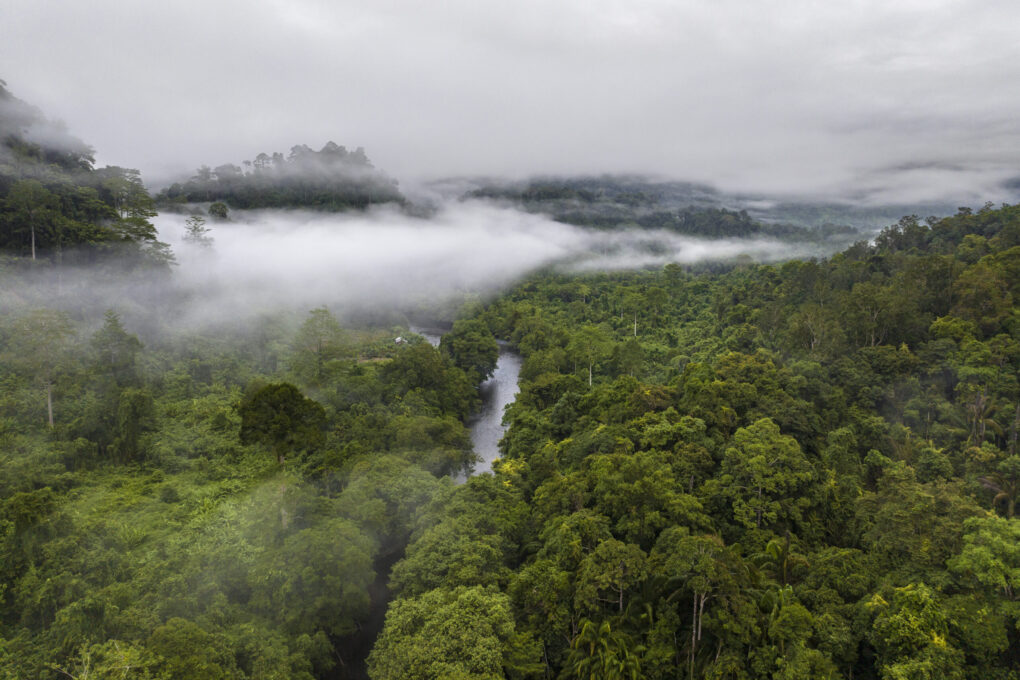
Community Action Grants has been supporting NGO partners in the Mahakam Ulu region, providing mentorship and training for Indigenous communities through onsite community organizers and rights and monitoring training programs. Additional gathering of data regarding agrarian conflict narratives, plantation permits/spatial data, and potential rights cases will also be compiled into a Mahakam Ulu Conflict Atlas to help with advocacy and legal efforts to address the threats to the Mahakam landscape. Over the long-term, work in the region seeks to support communities’ efforts to secure land rights recognition to their customary forests.
Reaching Communities in Their Languages
While the grants to support community participation at COP 30 and NGO partners in the Mahakam Ulu region are just a snapshot of RAN’s worldwide Community Action Grants program this year, we have also attempted to reach our partners in their own languages by translating our website into Spanish and Bahasa Indonesia. Our Community Action Grants team understands that grantees may face obstacles related to English-language communication and would like to learn more about the projects RAN supports. That’s why we decided to translate our website into two of our grantees’ most spoken languages.
The updated website also enables our community to engage more with our partners by mapping them and providing exclusive media related to our grants. It also consolidates our past reports in one place, where our community can learn how RAN has remained at the forefront of the climate justice movement for over 30 years.