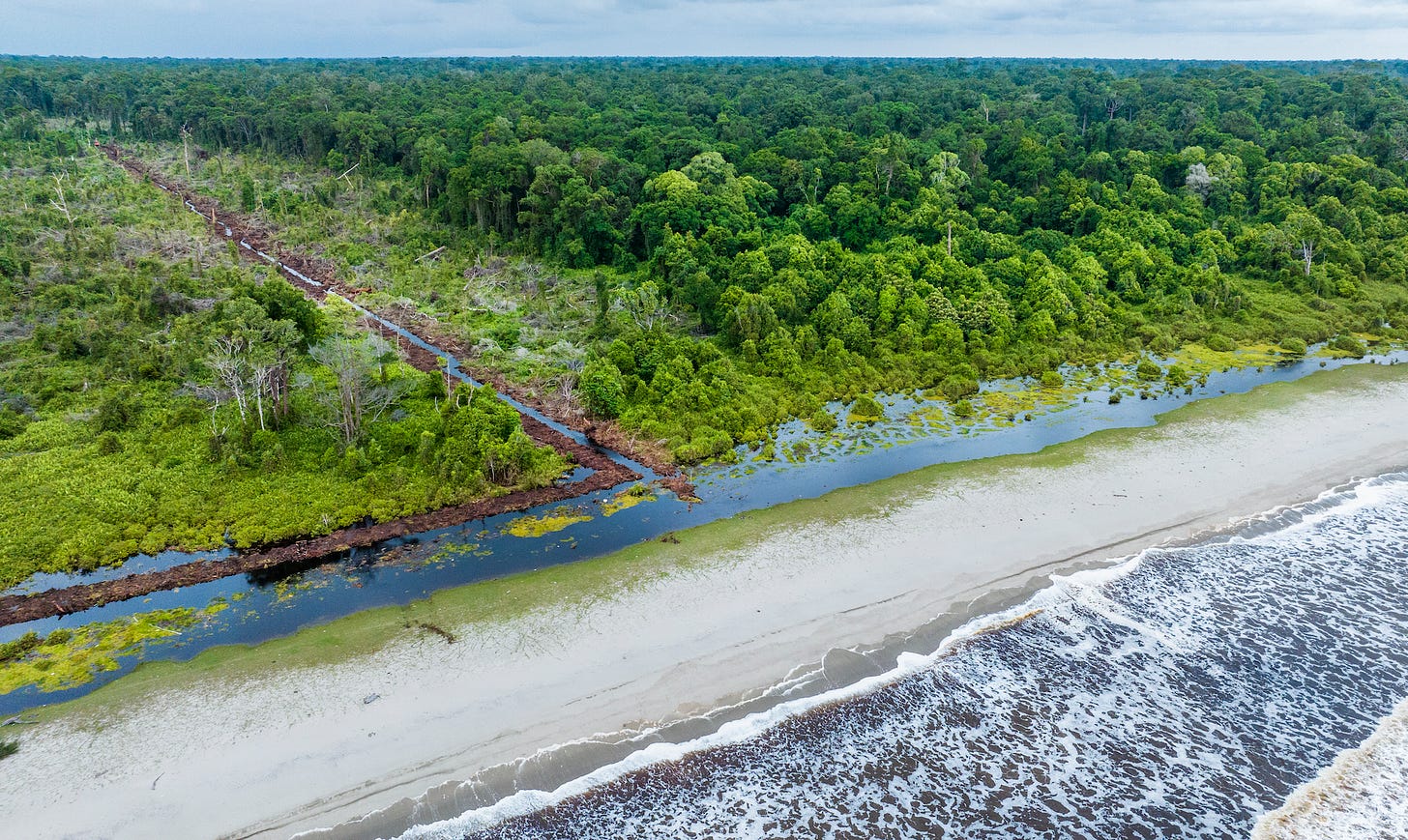
Palm oil producers are draining peatlands located in the Orangutan Capital of the World, a highly destructive act that turns the soil into a flammable carbon bomb.
Ultra-high-resolution satellite imagery has revealed 157 miles of illegal drainage canals in the Singkil peatlands in Aceh, Indonesia, home to the highest density of Sumatran Orangutans anywhere on Earth.
Palm oil producers drain peatlands based on the erroneous belief that wetter soils produce lower palm oil yields. The resulting dried-out soils are an extreme fire hazard that dump tons of greenhouse gases into the atmosphere when they burn.
Peat fires are commonplace in Indonesia, and contribute substantially to Indonesia’s GHG emissions, which are among the top 10 in the world. They also cause an estimated 33,100 adults and 2,900 infants to die prematurely each year from respiratory illness.

The map above shows the 10 most destructive canals within the protected Rawa Singkil Wildlife Reserve, which have been in operation since December 2020. This date is significant because it means the palm oil coming from these areas is non-compliant with the requirements of the European Union Deforestation Regulation (EUDR), meaning it should be prohibited from entering the EU—the world’s third-largest palm oil importer. Palm oil grown on the lands inside this reserve are also grown illegally under Indonesian law.
Despite emerging government regulations and the growth in voluntary corporate commitments to combat rainforest and peatland destruction over the last decade, we’ve repeatedly exposed how illegal palm oil from the Rawa Singkil Wildlife Reserve continues to flow into the supply chains of major brands.
Brands including PepsiCo and Unilever have signed onto regional conservation measures in Aceh to help prevent this type of destruction from happening, but those programs don’t cover the impacted areas described here.
Without immediate intervention to block these illegal canals, palm oil producers will continue to turn one of the planet’s most verdant, biodiverse landscapes into a parched and fire-prone wasteland.