Mahakam Ulu, an ancient watershed in East Kalimantan, Indonesia, offers a glimpse into what Borneo used to be — before demand for coal, potato chips, shrimp, and even RVs wiped out about a third of the island’s rainforest.
Slightly smaller than the state of South Carolina, the region teems with iconic and strange life: Proboscis monkeys, clouded leopards, Bornean orangutans — stouter and more reddish-brown than their Sumatran cousins — and Irrawaddy river dolphins.
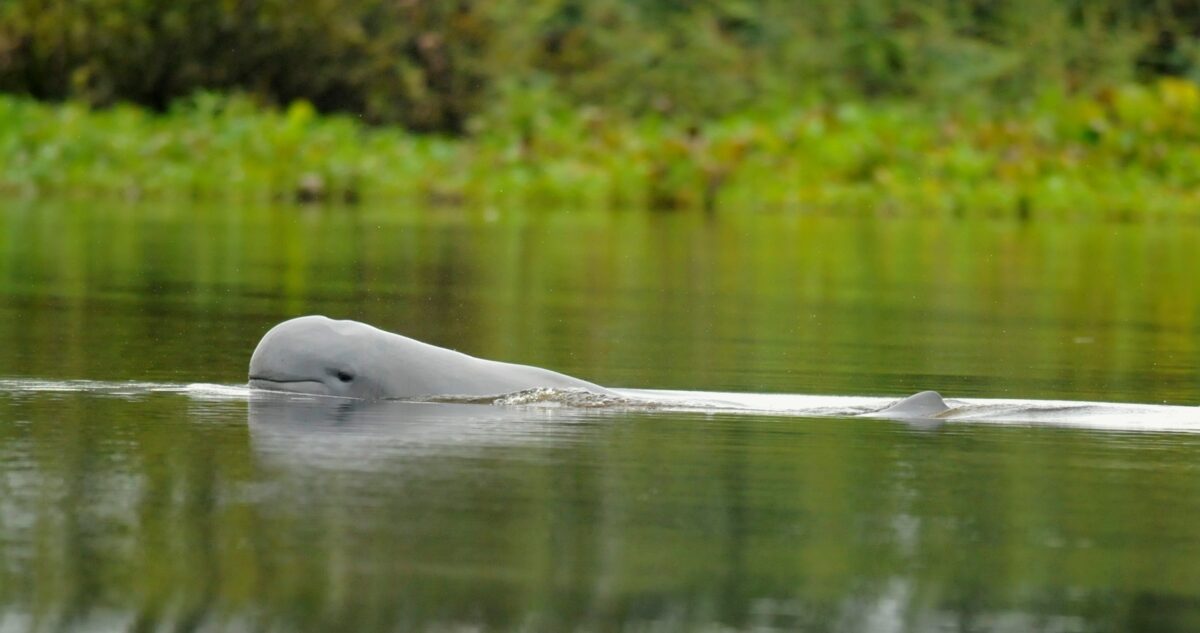
The Mahakam River, Indonesia’s second longest, threads through the landscape, connecting nine Dayak Indigenous communities and a total of eighteen ethnic groups along its 609-mile length, which stretches from the cloud forests of the Borneo highlands to the mangroves of the Mahakam Delta.
Nearly ninety percent of Mahakam Ulu remains forested, compared with just fifty-five percent of greater Borneo. Its forests host countless orchids, trees and carnivorous pitcher plants — like the strikingly deep-purple Nepenthes mapuluensis — and nearly three hundred bird species, including critically endangered helmeted and rhinoceros hornbills, which feature prominently in local legends, ceremonies, and beliefs.
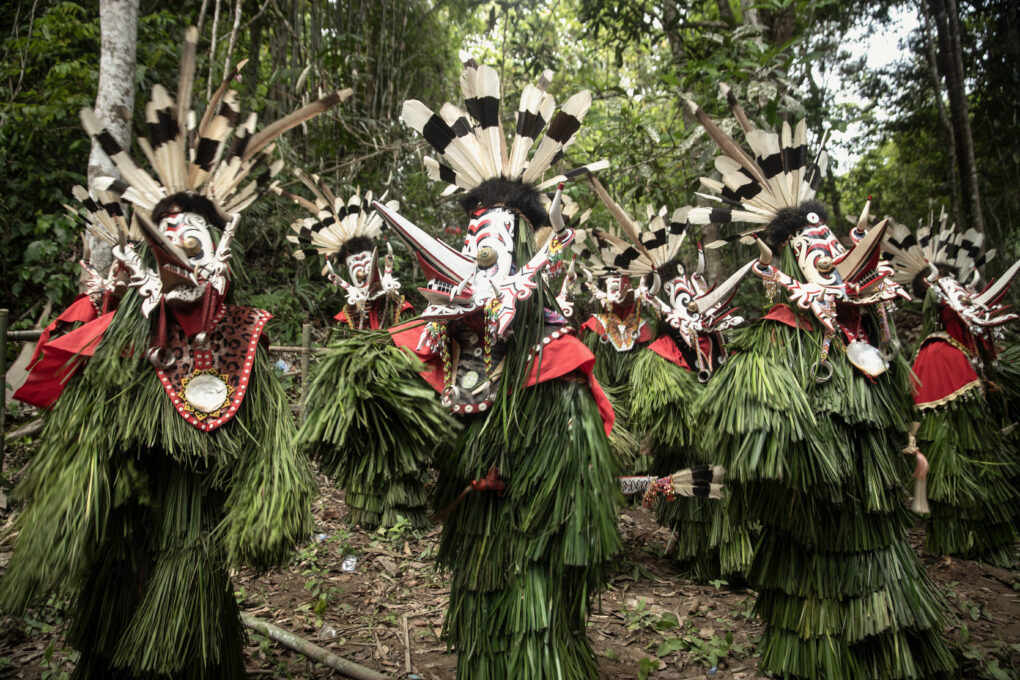
Mahakam Ulu’s ecosystem is a living archive of Borneo’s cultural and natural history — one that took millions of years to evolve, but that could vanish in a little more than a decade.
Industrial threats have intensified in recent years. Permits for industrial logging, oil palm, and coal mining have proliferated, now covering more than sixty-five percent of Mahakam Ulu regency. New infrastructure projects, including the Trans-Kalimantan highway and Indonesia’s proposed new capital city, Nusantara, place the region in a state of extreme uncertainty.
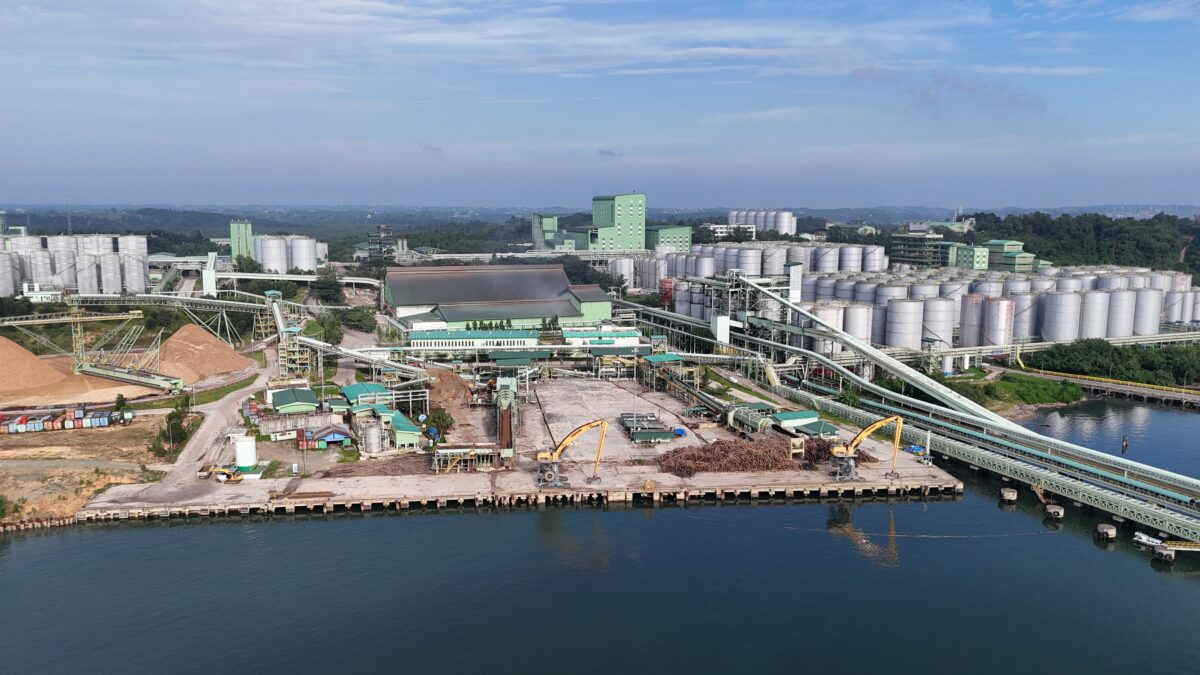
If current trends continue, Mahakam Ulu will lose twenty percent of its intact forests in five years. Such destruction poses an existential threat to local Dayak peoples, whose livelihoods and traditions are inseparable from the ecology of Mahakam Ulu.
The loss would, of course, ripple far beyond human communities, pushing rare and critically endangered species closer to extinction, including potentially hundreds of undiscovered plant and animal species.
Mahakam Ulu offers a window into Borneo’s past — and we want to make sure it’s a part of Borneo’s future. In the months ahead, we’ll be introducing this landscape to wider audiences and revealing what we have in mind to protect it. Stay tuned.