Conflict Palm Oil Expansion Persists: Vigilance is Needed to Protect the Leuser Ecosystem from Deforestation
In August 2025, major brands and palm oil traders launched the Aceh Sustainable Palm Oil Working Group, marking what many hoped would be a new chapter in the fight to protect the Leuser Ecosystem. For the first time, province-wide forest monitoring and response systems are being established—an encouraging sign that the years of pressure and advocacy are beginning to bear fruit. Yet, while momentum is building, the work is far from over.
Investigations by Rainforest Action Network (RAN) this year reveal that deforestation is still occurring inside critical wildlife corridors of the Leuser Ecosystem, driven by new patterns of palm oil expansion. Land speculation, through the piecemeal acquisition of hundreds of small land titles, is replacing the large-scale concession clearances of the past, carving up lowland rainforest and threatening elephants, orangutans, and countless other species. The palm oil sector, despite its global commitments, remains tainted by deforestation.
The window for change is open, but it is narrow. The Aceh Sustainable Palm Oil Working Group–– and the global brands and palm oil traders in the group––now faces a decisive test: whether they can turn commitments into action and finally rid the palm oil sector in Aceh of deforestation once and for all.
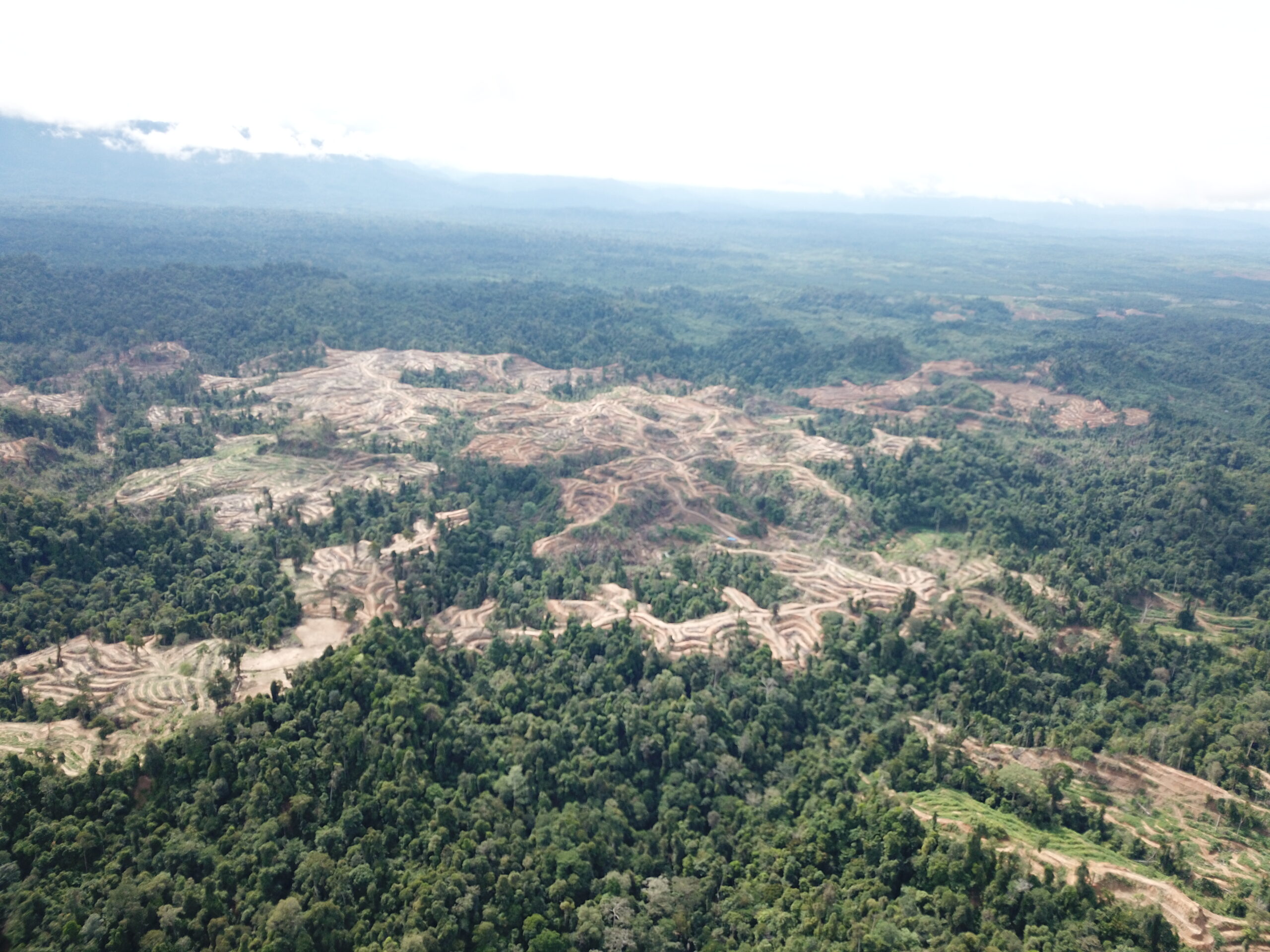
Drone footage documents the extent of deforestation by rogue actors within the concession area of PT. Putra Kurnia.
Deforestation hotspots in the Leuser Ecosystem
Since 2014, overall deforestation rates in the Leuser Ecosystem have declined, thanks in part to the adoption of No Deforestation, No Peatland, and No Exploitation (NDPE) commitments by many palm oil producers. These policies have helped halt large-scale clearing within most industrial concessions. Yet, destruction persists. Today, it is less about bulldozers razing vast concessions at once and more about a quieter, but equally dangerous, form of expansion: the accumulation of hundreds of individual land titles stitched together into patchwork plantations.
This new pattern of land speculation is visible from space. Satellite imagery reveals a mosaic of clearings that, piece by piece, add up to large-scale plantations. One high-profile example emerged in 2024, when PT. Sawit Panen Terus in Subulussalam was exposed for clearing over 1,300 hectares in a single year. Now, this pattern is spreading eastward into the lowland rainforests of Aceh Timur and Aceh Utara—areas that are vital habitat for Sumatran elephants and orangutans.
In Aceh Timur, the case of the former PT. Putra Kurnia concession illustrates how this new wave of deforestation unfolds. Once notorious for forest loss in 2020, the concession has seen a resurgence of clearing in 2024 and 2025—but this time involving new actors. Investigators have identified PT. Sawit Nabati Indah (PT. SNI) as a driver of over 400 hectares of recent destruction for palm oil plantations. At the same time, PT. Mulia Tani Jaya (PT. MTJ), a logging company, is reported to operate in the area and may be running a sawmill to process the timber extracted from Leuser’s rainforests. Local sources also point to PT. Anugerah, which has acquired 758 hectares of land and is expected to begin clearing additional forest. Together, these actors are piecing together large-scale palm oil development at the expense of one of the Leuser’s most critical wildlife corridors.
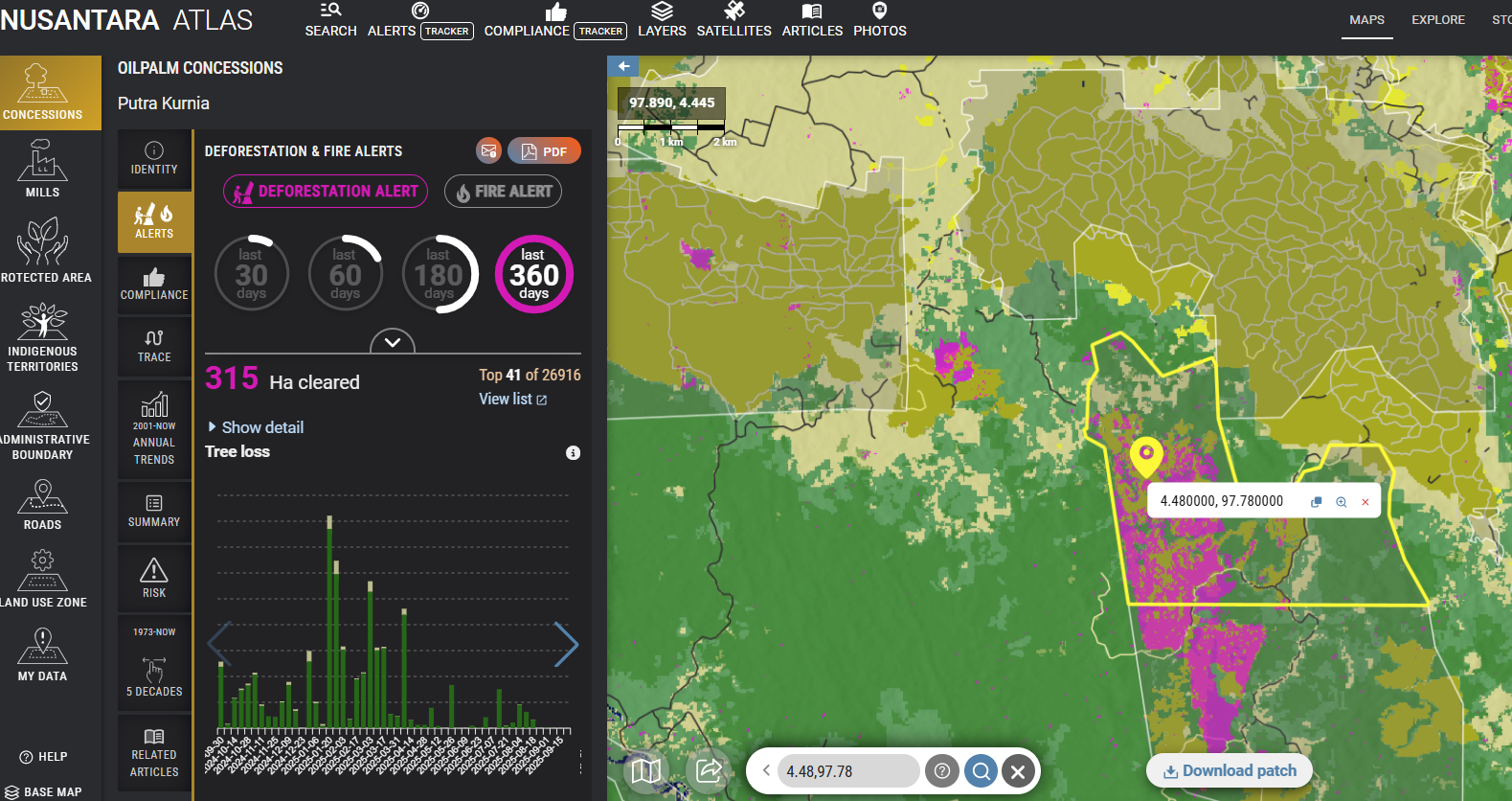
Nusantara Atlas shows the extent of clearing within the PT. Putra Kurnia concession in the last year. The yellow point is the location shown in the image above. Credit: TheTreeMap
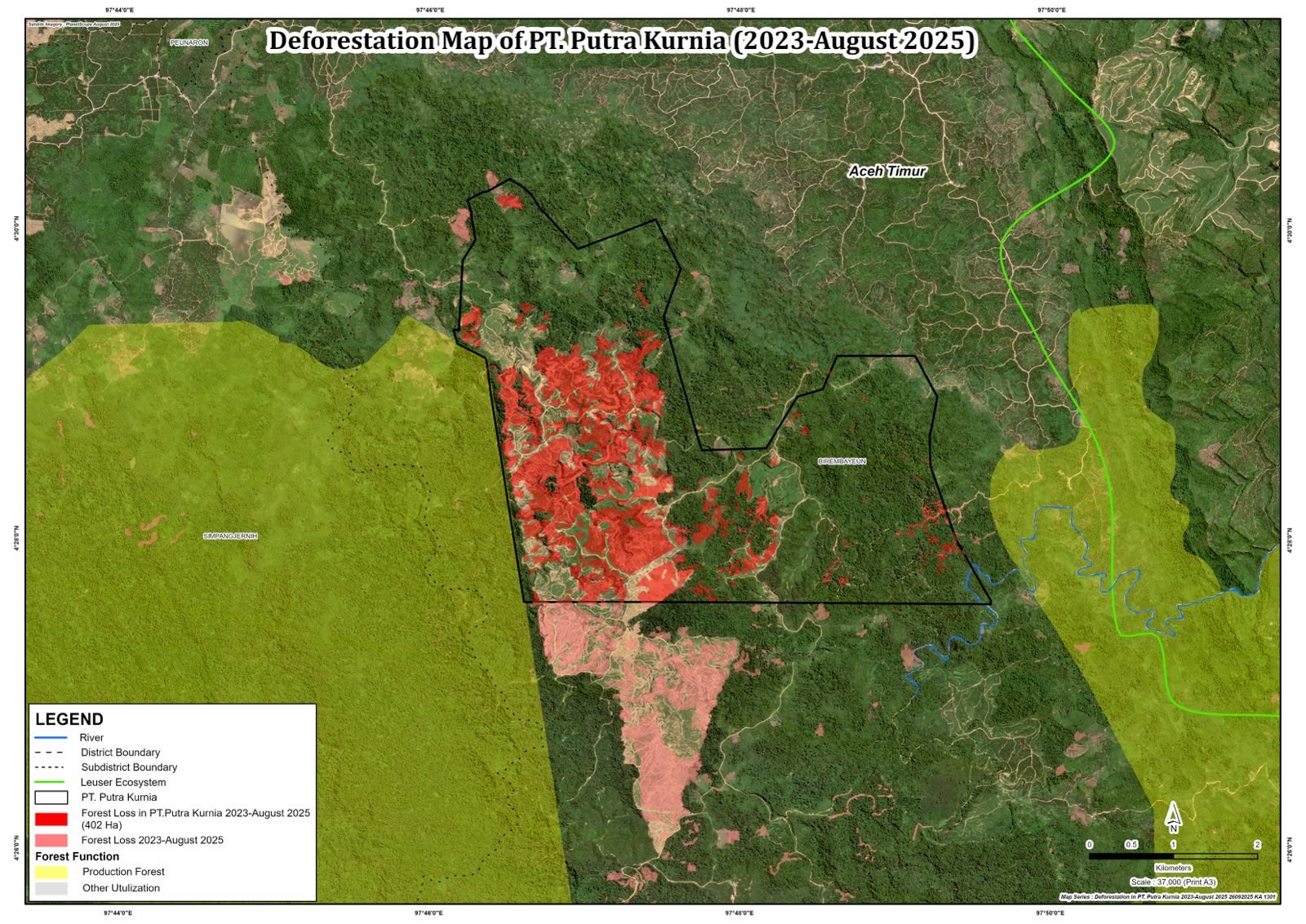
Map showing the extent of deforestation within the concession of PT Putra Kurnia. Deforestation also extends into the adjacent area which is a concession of PT. Nia Yulided
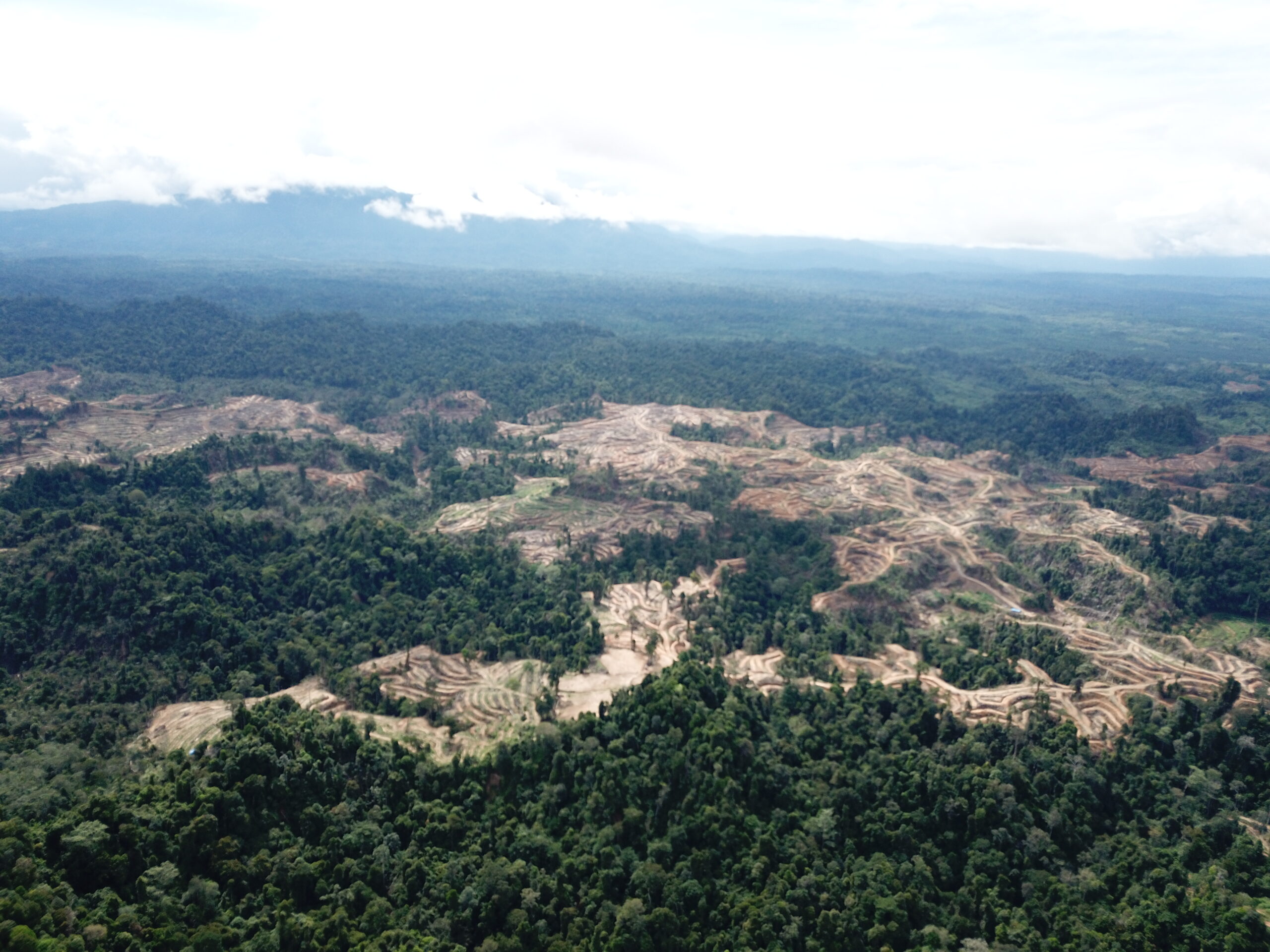
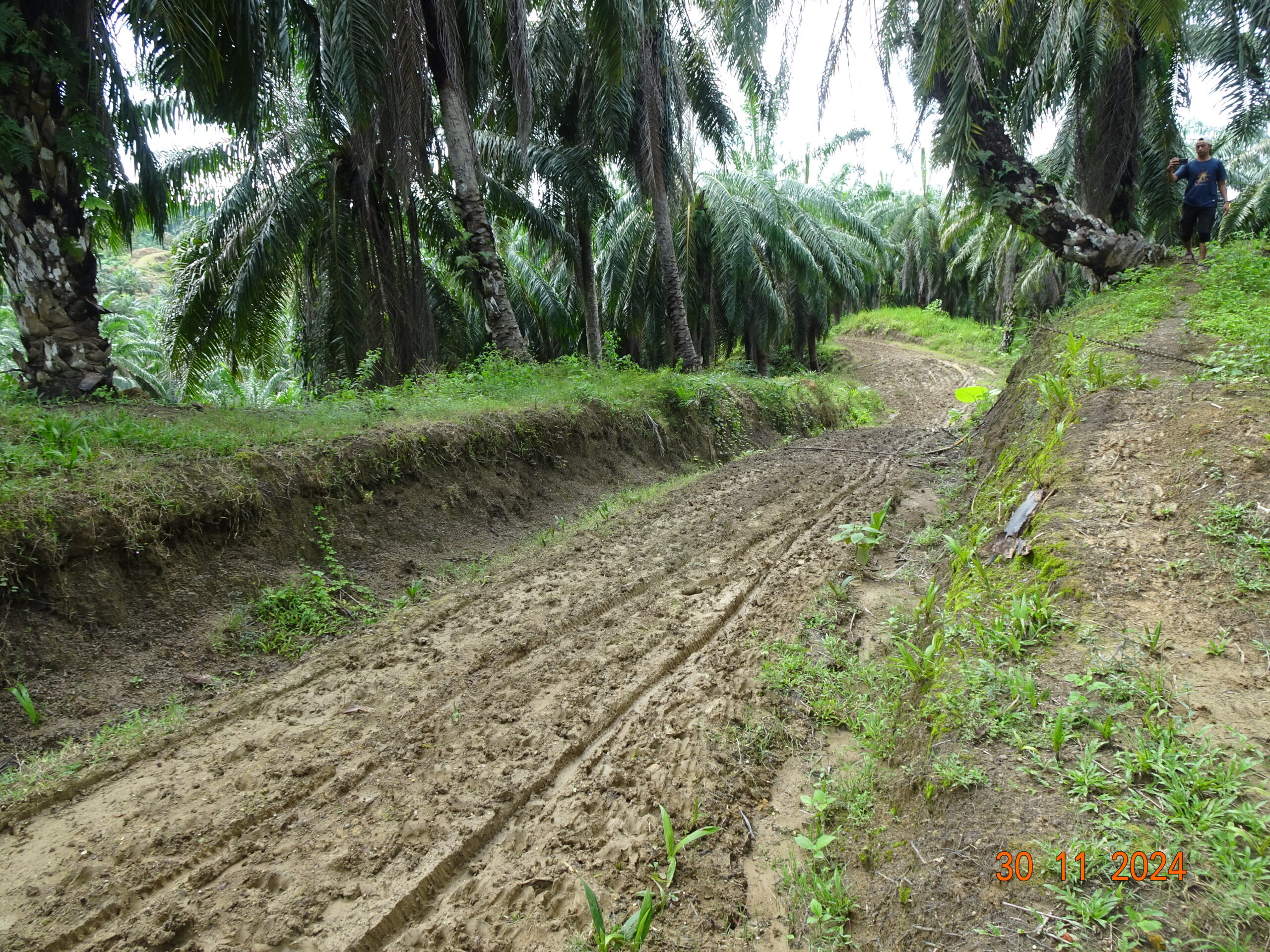
Roading through PT. Putra Kurnia palm oil concession, Aceh Timur, November 2024. 04°29’23.05″N 97°49’10.54″E
As shown above, drone footage and mapping tools such as Nusantara Atlas now provide undeniable evidence of this patchwork destruction in Aceh Timur. Roads are being cut deep into the rainforest, opening the way for further clearing and increasing the risk of human-wildlife conflict with nearby communities. Recognizing this, the district government of Aceh Timur has attempted to promote NDPE practices, gathering palm oil companies in early 2025 for training on sustainable standards. Yet, conspicuously, PT. Sawit Nabati Indah was absent—raising questions about its commitment to change. By contrast, other local companies once implicated in deforestation, such as PT. Aloer Timur and PT. Tualang Raya, did attend, signaling that progress is possible when pressure is applied.
Global buyers such as PepsiCo and Unilever continue to back collaborative, multistakeholder programs in the district, but these efforts have yet to stop the spread of land speculation–driven deforestation. Until they do, the Leuser Ecosystem remains under threat from this shifting, more fragmented, but no less destructive frontier of palm oil expansion.
The Need for Vigilance
After a decade of watchdog reporting, it is clear that the Leuser Ecosystem is emerging as a rare good-news story in the global fight against deforestation. Rates of destruction have declined, conservation breakthroughs have been won, and new systems of accountability are taking shape. But the threats are not over. Palm oil expansion through speculative land grabs continues to chip away at the edges of one of the world’s most important rainforests, undermining both local communities and global biodiversity.
The survival of the Leuser Ecosystem will depend on what happens next. Government agencies, palm oil traders, and major brands must act decisively to enforce existing protections and rid the palm oil sector from deforestation and human rights violations for good. Civil society, communities, and consumers will remain alert and engaged. The future of the Leuser Ecosystem is not yet secured—and only through continued vigilance can its forests, rivers, and extraordinary wildlife truly be safeguarded for generations to come.
A Note of Thanks
As Leuser Watch closes after ten years of documenting the threats and triumphs of this irreplaceable ecosystem, we want to thank all of you who have followed, shared, and supported this work. Your attention has helped keep the Leuser in the global spotlight. Though this website’s journey ends here, the fight to protect the Leuser Ecosystem continues—and it is a fight we must all remain part of.
To follow Rainforest Action Network’s investigations visit our new dedicated platform Forest Frontlines.
The Forest Frontlines watchdog platform reveals the harm caused by the production of forest-risk commodities like palm oil, pulp and paper, soy, beef, cocoa, and rubber. Through original supply chain research, community case studies, and field investigations, Forest Frontlines connects the dots from sites of deforestation and human rights violations to the major global brands, banks, and traders who are ultimately accountable.