By
By The EU is planning to postpone its landmark Deforestation Regulation (EUDR) until December 2026, citing IT-system issues. The planned delay also comes after industry pushback, geopolitical pressure, and a deregulatory push in the EU Parliament. This would be the second delay in two years—one that shields corporate profits at the expense of the planet’s rainforests.
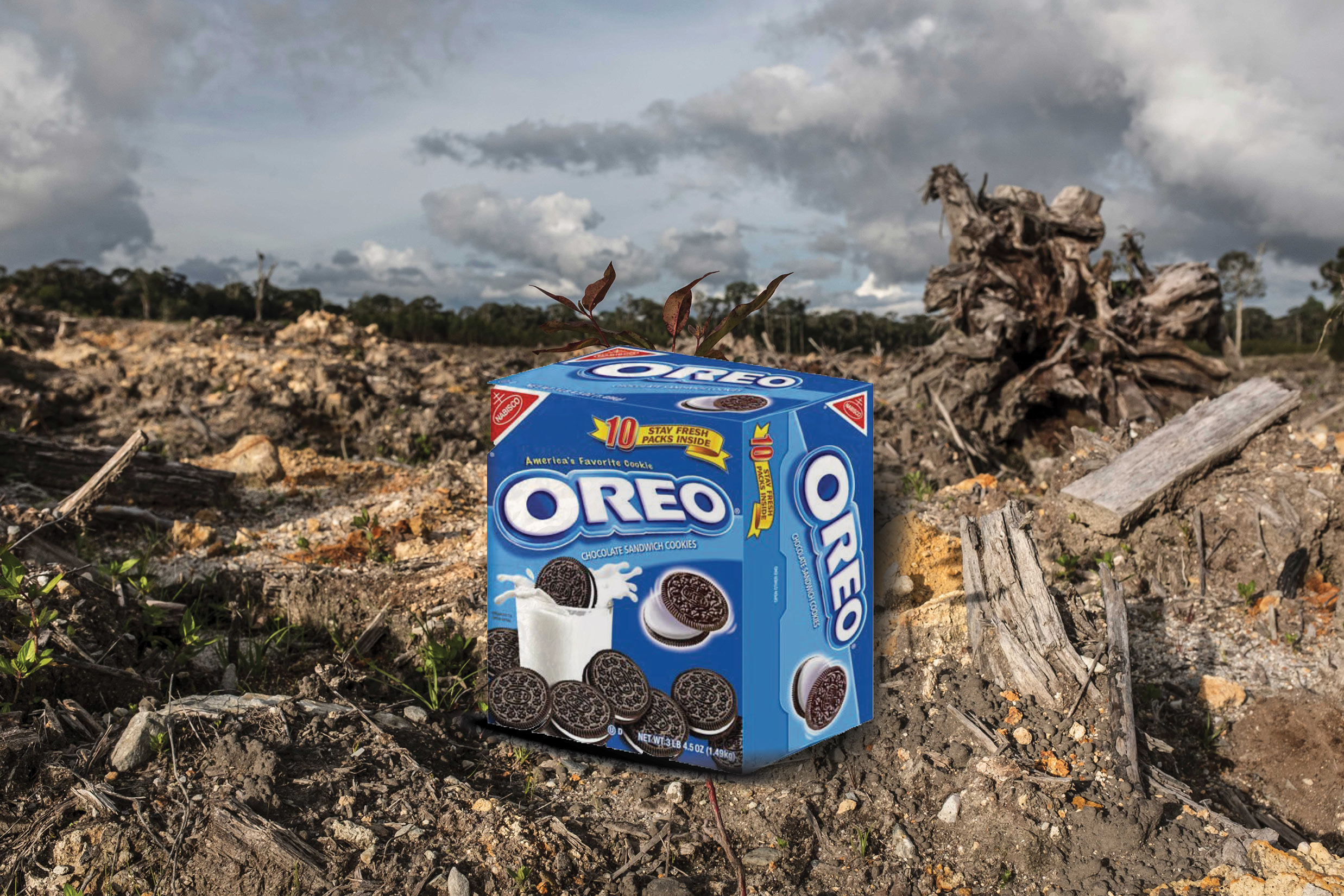
Agribusinesses, commodities traders, and consumer goods companies—including Mondelēz International, the maker of Oreo cookies—lobbied for the delay, claiming it would burden small farmers who lack the necessary mapping and geolocation tools to comply with the law.
The concern is that these small farmers would lose access to the EU market. But corporations don’t care so much about the well-being of small farmers as they do about having access to their crops: Mondelēz sources 91% of its cocoa from small farmers in West Africa.
Its $1 billion Cocoa Life program is an effort to shore up its cocoa supply by providing hundreds of thousands of small farmers in West Africa with skill-building in sustainable farming and farm management. This program includes a farm mapping and traceability system to monitor the source of cocoa beans. Yet, despite this investment, the company remains skeptical that small farmers are ready to meet the new legal requirements.
Years of adverse weather and crop disease have already strained operations, forcing Mondelēz to scale back its 2025 profit forecasts. In the second quarter, it reported an 11.3% decline in adjusted gross profits due to “unprecedented cocoa inflation.” Any further disruptions—such as compliance challenges under the new law—could squeeze margins even more.
Industry peers disagree with Mondelēz’ assessment: Nestlé and Ferrero stress the need for dedicated support for small farmers, but oppose further delays. In a joint letter to the EU, they called out efforts by stakeholders to “delay, revise, or even appeal” the EUDR, stating that it would only cause more deforestation and accelerate climate change.
The smallholder argument has become a familiar—and troubling—refrain. Industry groups have repeatedly invoked it to stall or find a way out of the EUDR. In Indonesia, palm oil lobbyists have pushed for blanket exemptions for small farmers, even as local elites posing as small farmers destroy massive amounts of rainforest in the Rawa Singkil, the so-called orangutan capital of the world.
For rainforest advocates, the fear is that we’re seeing the undoing of a generational environmental regulation in real time. Wealthy companies like Mondelēz should be working overtime, alongside regulators and NGOs, to help small farmers reach compliance. If the planned delay goes through, this will be the second time in as many years that the EUDR has been delayed. The planet cannot wait any longer.