Around the world, Indigenous communities are on the frontlines of defending the planet’s remaining tropical forests, and their victories are becoming powerful examples of how land rights can drive environmental protection. RAN has long recognized that supporting the fight of Indigenous communities for their land rights is not only just, but also offers a proven and sustainable path forward.
In Indonesia, a significant breakthrough occurred in September 2024, when the Harita Group, a major conglomerate with timber and palm oil interests, committed to permanently ending all commercial activities in the Indigenous Dayak Bahau territory of Long Isun, East Kalimantan. This milestone comes after more than a decade of resistance from the Long Isun community and their allies, who have tirelessly fought to protect their forests and way of life.
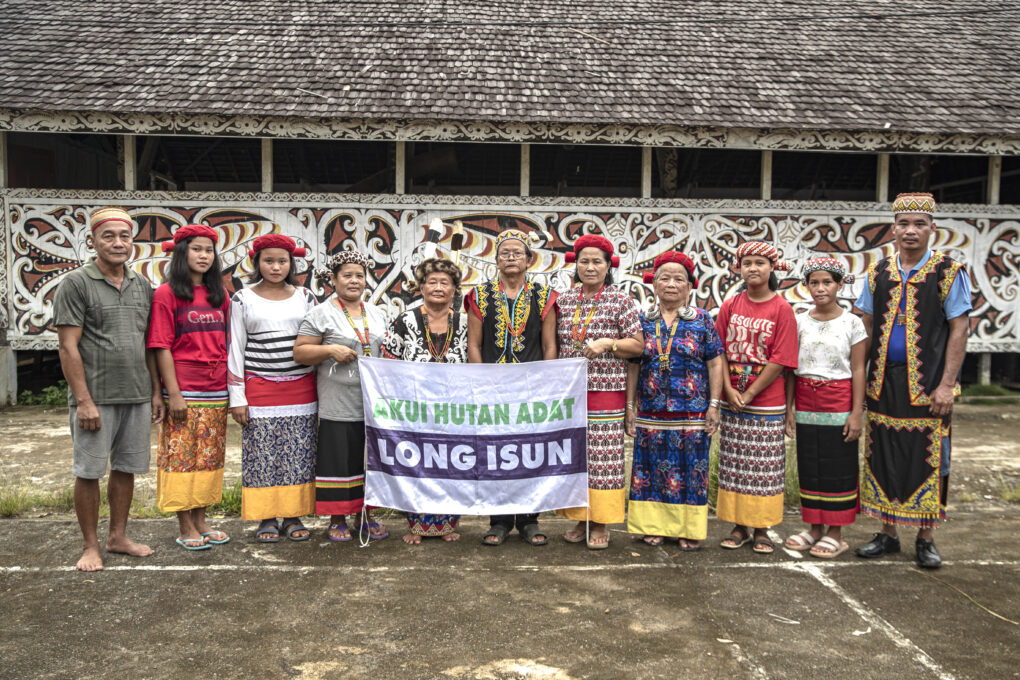
Long Isun’s forests, located in the upper Mahakam River basin on the island of Borneo, are not only rich in biodiversity but also essential to the community’s culture, economy, and identity. Without the community’s Free, Prior, and Informed Consent (FPIC), two Harita Group-owned companies began logging operations as early as 2014. The community responded with powerful opposition, facing intimidation and even criminalization. A temporary logging moratorium was reached in 2018, but concerns remained about future exploitation.
After pressure from RAN and other allies like local environmental group Walhi East Kalimantan and Perkumpulan Nurani Perempuan, an Indigenous-led organization working in partnership with the Long Isun community, the Harita Group finally pledged to remove Long Isun territory from all future development plans and designated it a “no-go zone.” While this marks a major shift, community leaders continue to call for the government to legally recognize their customary forest rights—hutan adat—as the only permanent safeguard against future threats.
This story echoes similar struggles elsewhere in Indonesia. In North Sumatra, PT. Toba Pulp Lestari (TPL), part of the Royal Golden Eagle Group, has reaffirmed its commitment to halting forest conversion in areas claimed by Indigenous communities and issued strengthened Human Rights and Sustainability policies. If implemented, this pledge and related new policies would protect lands like those of the Pargamanan-Bintang Maria community from being turned into plantations. However, continuous reports of intimidation and violence against the local community raises questions about the sincerity of the company’s commitment. A critical next step lies in completing village boundary and land rights mapping — a process that must be transparent, credible, and time-bound to ensure justice is upheld and a clear pathway can be taken for the recognition of the community’s customary forests.

The indigenous Batak community in the Pargamanan Bintang Maria village still maintains their incense forest and struggles against the expansion of the industrial plantation forest of PT. Toba Pulp Lestari (PT. TPL).
However, despite public commitments, many global consumer brands — such as Mondelēz, Procter & Gamble, PepsiCo, Kao, Nestlé, and Nissin Foods — continue sourcing from companies tied to forest-risk operations like those of Harita Group and Royal Golden Eagle. These brands, along with financial institutions like Japan’s Mitsubishi UFJ Financial Group, must take responsibility for their supply chains and financing. They need to demand respect for Indigenous rights not only from individual subsidiaries but at the corporate group level as well.
The cases of Long Isun and Pargamanan-Bintang Maria show that protecting Indigenous land rights is essential, not only for upholding human rights but for preventing deforestation and fighting climate change. Forests thrive where Indigenous communities have control over their ancestral lands. Legal recognition, corporate accountability, and global support must now follow, ensuring that these communities can continue protecting their forests for their future and ours.