Since 1993, RAN has distributed over $8 million through more than 1,200 grants to Indigenous and frontline communities. In the last two years alone, RAN provided $1.6 million in support through more than 150 grants across five continents, from the forests of Indonesia to the Amazon and the US Gulf South.
Although 2025 brought significant challenges for the climate movement worldwide — ranging from the rise of the global far right, to devastating forest fires from Southern California to the Amazon, and rising global temperatures — Indigenous and frontline communities remained resilient and unwavering, continuing to lead the movement for climate justice. A key pillar of RAN’s work over the past forty years has been supporting those at the frontline of the environmental and human rights movement and creating broad coalitions of resistance to corporate power and environmental destruction through our Community Action Grants Program, designed to channel funds quickly and efficiently to Indigenous and local communities who may otherwise not have access to more traditional forms of funding.
Over the last year, RAN distributed over $825,000 in Community Action Grants. CAG grants supported land rights strategies in Asia, BIPOC communities in the U.S. Gulf South, Amazonian and coastal communities in Ecuador and Peru, Afro-descendent and Indigenous communities in Colombia, and broad alliances in Brazil. 2025 has shown that the struggles that unite communities can overcome the barriers put in place by those in power to divide them, a theme that will continue to inform our strategy.
The Road to COP30
COP30, to be held in Belém, Brazil, is expected to have the largest Indigenous participation in the history of the UNFCCC, marking a key moment for Indigenous participation in global decisions and policy guidelines addressing climate change. As the Brazilian Amazon hosts the UN Climate Conference, the global spotlight will be turned to forest protection, Indigenous peoples, and their territories, as these are critical to achieving any real solution to addressing the climate crisis.
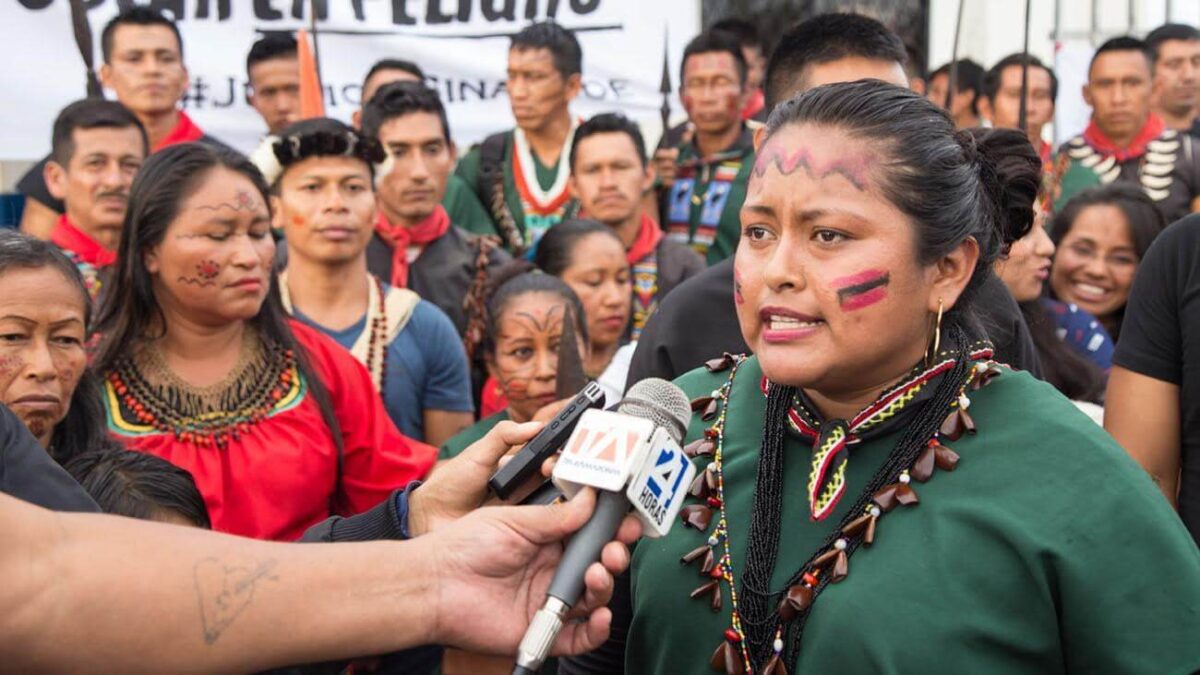
Community Action Grants has prioritized mobilizing funds to support Indigenous and frontline communities in their participation around COP30, including for Indigenous women-led delegations from across the Amazon. CAG is also supporting community-led gatherings and events in the lead-up to COP30 to develop strategies that pressure governments, corporations, and financial institutions to implement an equitable phaseout of fossil fuels and to invest in Indigenous visions and solutions to protect their ancestral territories and critical forest habitats.
A major sustainable, community-driven mobilization and delegation that CAG is supporting is the Indigenous River Caravan, a 3,000 km journey along the Napo and Amazon Rivers from Ecuador to Brazil uniting Amazonian leaders to amplify frontline climate solutions from different territories on the way and to participate in the conference and side events in Belém. This floating platform of resistance and hope is documenting stories, advocating for policy change, and centering traditional knowledge in global climate action. Key objectives of the Indigenous River Caravan include: unifying grassroots agendas through strengthening Indigenous-led climate justice demands across the Amazon; amplifying voices through sharing frontline stories globally through documentaries, art, and advocacy; driving policy change through pushing for funding and recognition of Indigenous solutions in UN negotiations; and decolonizing climate action through challenging extractive systems with sustainable, community-rooted alternatives.
In coordination with Amazon Watch, CAG is also supporting The Answer Caravan, an alliance of more than 40 Indigenous and local community organizations, social movements, and NGO allies staging an emblematic mobilization to confront Brazil’s destructive export-oriented agribusiness model. The alliance is also calling for investments in sustainable agroecology, monoculture free zones, and public participation in infrastructure planning. Traveling 3,000 km from Brazil’s soy-producing powerhouse, Mato Grosso state, to COP30’s host state, Pará, the mobilization includes a 13-day caravan, following the Amazon’s principal grain export route. It is a critical frontline action to halt agribusiness’s destructive advance into the Amazon while promoting local community agro-ecological alternatives.
CAG is also supporting Casa Maraká, an inclusive and intersectional space hosted by If Not Us Then Who, in collaboration with Mídia Indígena, an Indigenous-led Brazilian communicators collective, in Belém, in the lead up to and during COP30. Casa Maraká offers a space for Indigenous peoples, Black environmental leaders, local communities, activists, artists, and decision-makers to share, connect, and communicate, amplifying ideas related to a Just Transition grounded in a climate justice framework that uplifts care economies, community-led solutions, and Indigenous rights.
Supporting Community Action
CAG is a key component of RAN’s work, ensuring that frontline communities, particularly Indigenous communities, are able to access funds critical to progressing their own work. The program aims to decolonize these funding networks, which reflect the inequalities between the Global North and Global South, as well as the histories of extractivism and colonialism, by facilitating access to funds for organizations that may not typically be able to access these funding networks. The program is enhanced by RAN’s diverse global team of advisors, who are in constant contact with frontline communities in critical regions around the world. Thanks to the help of our supporters and partners, RAN will continue to prioritize funding these critical efforts through our Community Action Grants program. You can learn more about CAG, including selected stories from frontline activists and grantee report backs, at our newly updated Community Action Grants site, grants.ran.org.